
Original Sin? I was born and already at fault? Not quite.
You were born, and apparently you were already guilty. That is the message countless Christians absorb from the doctrine of Original Sin — and it is one of the most counterproductive framings in the history of religious thought.
The concept itself is not wrong. The terminology is a disaster.
“Sin” has outlived its usefulness as a word. In the 21st century it arrives pre-loaded with connotations of divine punishment, eternal damnation, and inherited guilt that have nothing to do with what the idea was originally trying to communicate. At its core, sin was never meant to condemn. It was a symbol for the ego’s weaknesses — those patterns of selfishness, pride, fear, and disconnection that pull us away from our innate unity with the universe and with each other. These are not flaws to be condemned. They are opportunities for growth, waiting to be recognized through honest self-reflection.
Original Sin, understood symbolically rather than literally, describes something real and universally experienced: the shift from unified, egoless consciousness into fragmented, individualistic awareness. We were all, in the most literal sense, born without ego. Infancy is as close to pure oneness with the universe as most of us will ever get — before the self-concept develops, before separation becomes the default mode of experience. The gradual development of the ego is what the Eden allegory was always describing. The Tree of Knowledge represents the birth of intellect and self-awareness. The “fall” is not a supernatural punishment. It is the inevitable human journey from egoless unity into individual identity — and the talking snake was your first clue that none of it was meant to be taken literally.
A more honest term for what Original Sin is trying to describe might simply be The Fall of We — the development of individualistic ego-consciousness and the sense of separation it produces, pulling us away from the euphoric oneness we last experienced as egoless infants. Unlike Original Sin, that framing carries no implication of personal fault or divine punishment. It simply names what happened and points toward what is possible.
Because this disconnection is not permanent. The teachings of Jesus, Buddhism, Hinduism, and other spiritual traditions all converge on the same essential truth: the separation is an illusion, and it can be healed. What Christianity calls heaven, Buddhism calls Nirvana, Hinduism calls Moksha, and Zen calls Satori are different names pointing at the same transcendent state of consciousness — the restoration of our oneness with the universe. The overlap is not coincidental. These traditions are describing the same interior territory from different cultural vantage points, which is why many Christians find Buddhist practices of introspection and meditation not only compatible with their faith but deepening of it.
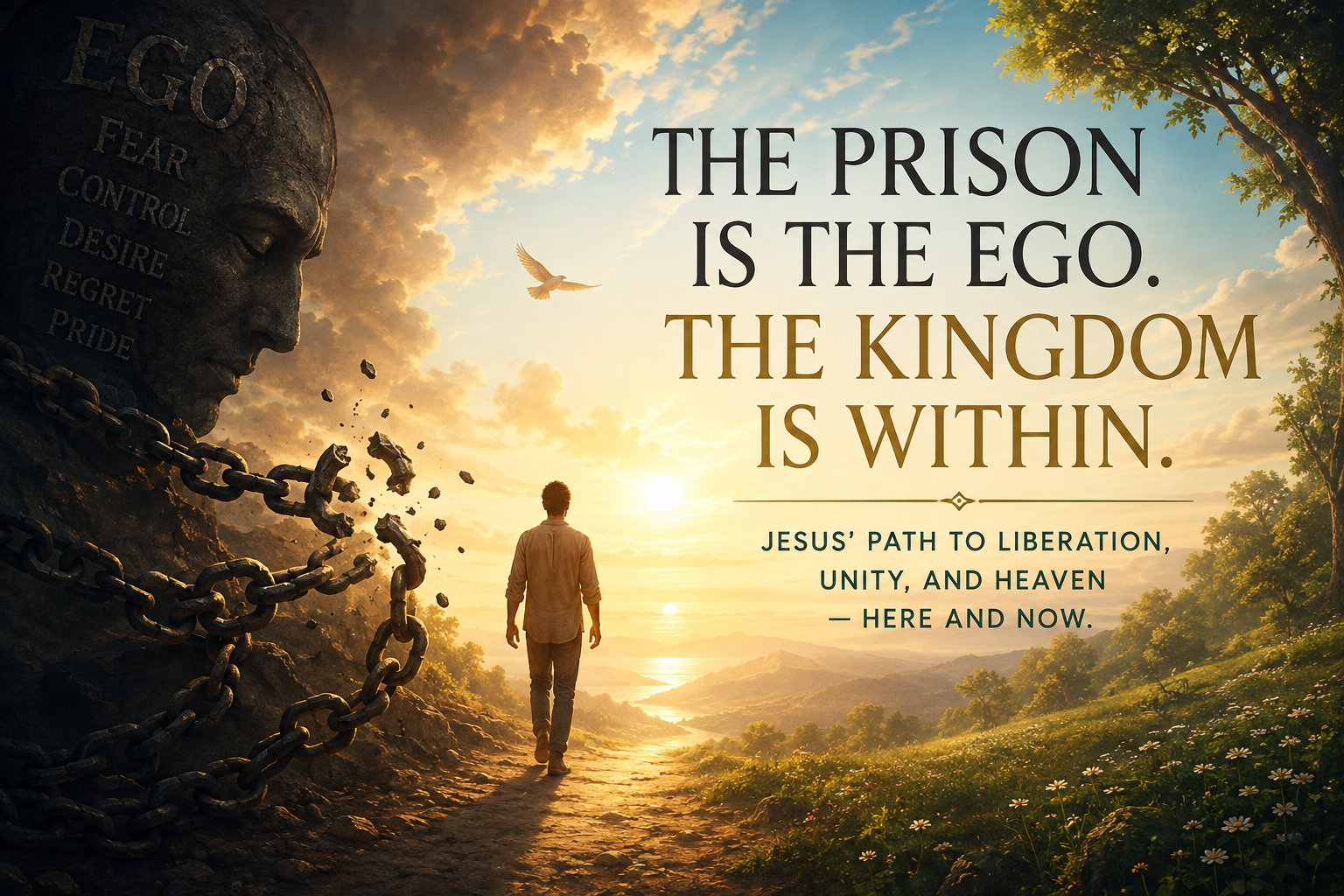
Hell, understood through this same lens, is not a literal lake of fire awaiting the unrepentant after death. It is a symbolic description of a life lived entirely under the ego’s dominance — disconnected, fearful, reactive, and separate. It is the state the ego produces when left unchallenged. And it is a state we have the power to transcend during our lifetimes, not one we are helplessly assigned after them.
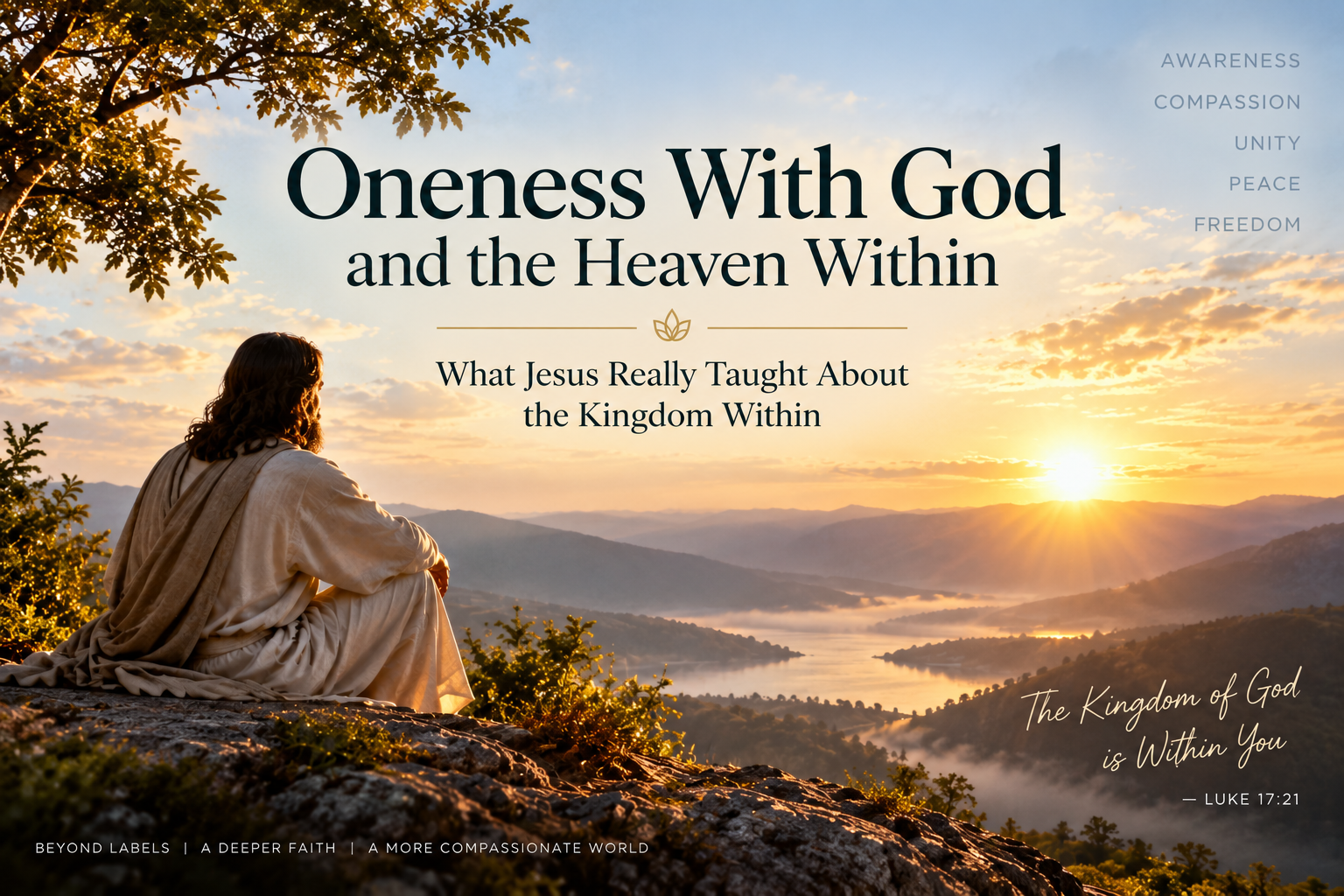
This brings us to perhaps the most damaging lie in contemporary Christianity: the claim that heaven is a post-death destination rather than a present-moment experience. Jesus never said this. He located the Kingdom of God explicitly within the living person, available now. For over 2,000 years, the promise of a post-mortem paradise has quietly deprived countless people of the profound experience of awakening that was available to them during their actual lives. Imagine arriving at the end of your life and realizing that heaven was never a future reward — it was always meant to be lived here, and no one told you.
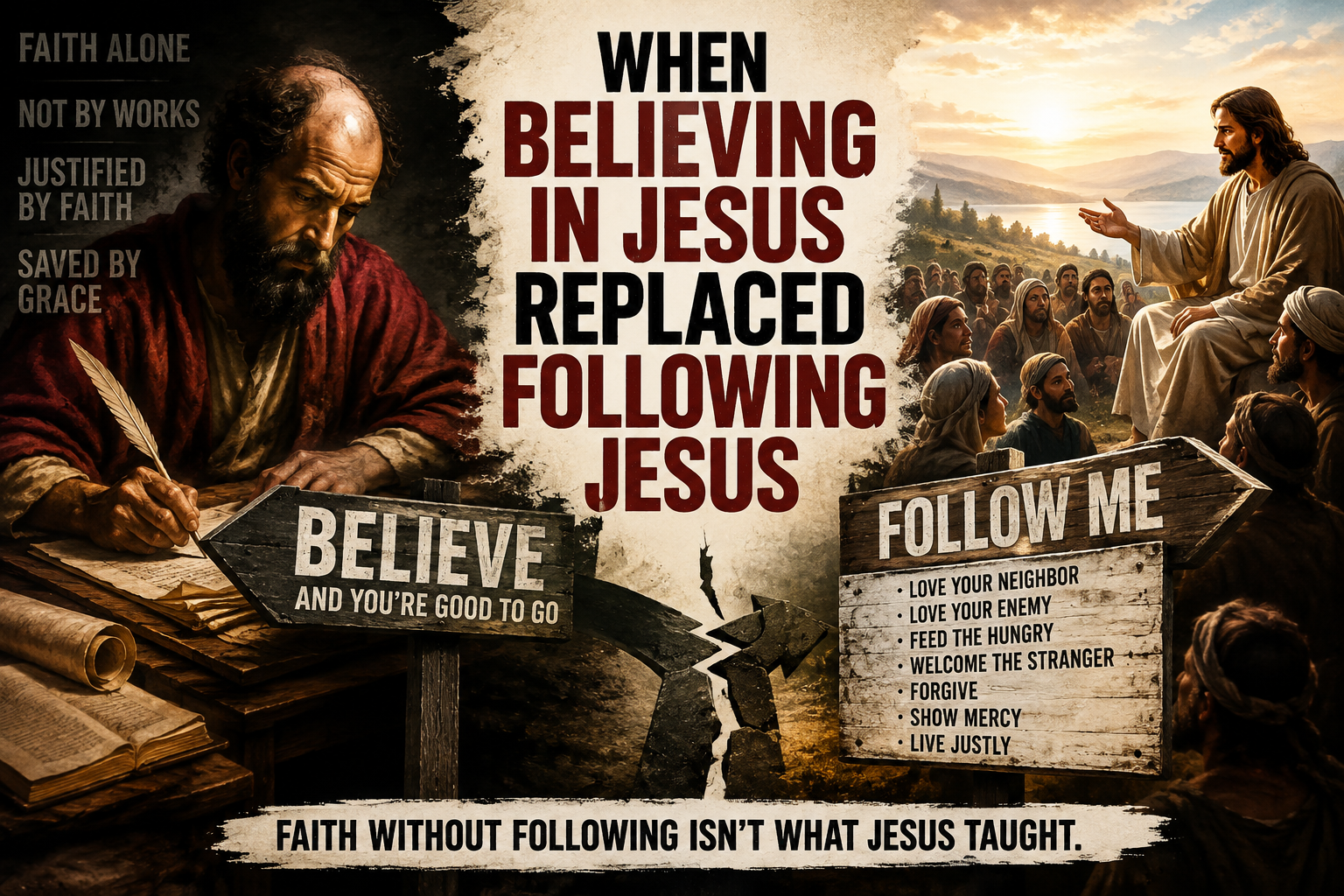
The corruption of “born again” follows the same pattern. The term implies something genuine and transformative — a radical shift in consciousness, a reunification with the universe, something analogous to what other traditions call Kundalini awakening or Satori. In practice, many contemporary churches reduce it to a single question: “Do you accept Jesus as your savior?” A verbal yes, and you’re declared saved. Born again. Done. No lifestyle change required. No inner work. No practice. Just membership confirmed.
There is no passage in the teachings of Jesus where he instructs anyone to make this declaration as the trigger for spiritual awakening. What he does say is that those who love him will follow his commandments. The declaration is not the path. Living the instructions is the path, and that distinction matters enormously.
“Jesus died for your sins” should be understood in only one defensible sense: he endured immense suffering and gave his life spreading a message of enlightenment that threatened the most powerful forces of his day. It does not mean he paid a cosmic debt that absolved you of all further responsibility for your own inner state. That interpretation is not a teaching of Jesus. It is a corruption of one — a convenient reframing that eliminates the very inner work his entire message was designed to produce.
The gap between where science and spirituality currently stand is narrowing faster than most people recognize. Quantum physics has begun confirming what mystics have intuited for centuries: that there is a unifying, intelligent presence permeating all things, and that consciousness interacts with it in ways not yet fully understood. The Holy Spirit is not a fictional abstraction. It is a real, accessible dimension of the universe — one that responds to sincere invocation and assists in the work of dissolving the ego’s grip. Truth, in the end, lives at the intersection of science and spirit. Two languages. The same reality.
The word “sin,” with all its baggage, is not necessary to convey any of this. What it describes — the ego’s particular weaknesses, the patterns of selfishness and disconnection that deepen our separation from the universe and from each other — can be named plainly, without the freight of shame and condemnation the word carries. These are values, incidentally, that most secular people would readily endorse. The widespread drift away from Christianity has less to do with Jesus’s actual teachings and far more to do with how thoroughly those teachings have been buried under the very behavior they were designed to correct.
We are long overdue for a direct, pragmatic articulation of what Jesus was pointing toward — one stripped of metaphors that are now more confusing than illuminating, one that does not require ancient symbolism to convey what we can now say plainly: you were not born guilty. You were born whole. The ego developed, as it does in every human being, and with it came the illusion of separation. The work of a conscious life is to recognize that illusion, dissolve it through genuine inner practice, and return to the state of oneness that was always, underneath everything, your original nature.
That state is available now. It has always been available now. No death required.

Leave a Reply