Once Upon a Time: Why Genesis Was Never Meant to Be Taken Literally
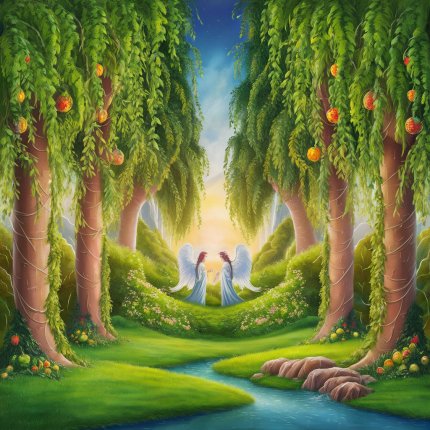
The story of Adam and Eve announces itself as allegory almost from its opening line. “In the beginning” functions much like “once upon a time” — a literary signal that what follows is a narrative framework for conveying truth, not a historical account to be defended against science. The talking serpent, the magic fruit, the garden paradise: these are the elements of myth, deliberately employed by ancient writers who lacked a scientific vocabulary for the complex realities they were trying to describe.
That allegorical nature is further confirmed by the story’s origins. The Garden of Eden is a retelling of earlier Sumerian tales describing a paradise called Dilmun — one of several instances in the Old Testament where older legends were absorbed and reimagined. The presence of other humans outside the Garden also directly contradicts any claim that Adam and Eve were the sole progenitors of humanity. For anyone reading carefully, that detail alone settles the question of literal interpretation on its own terms.
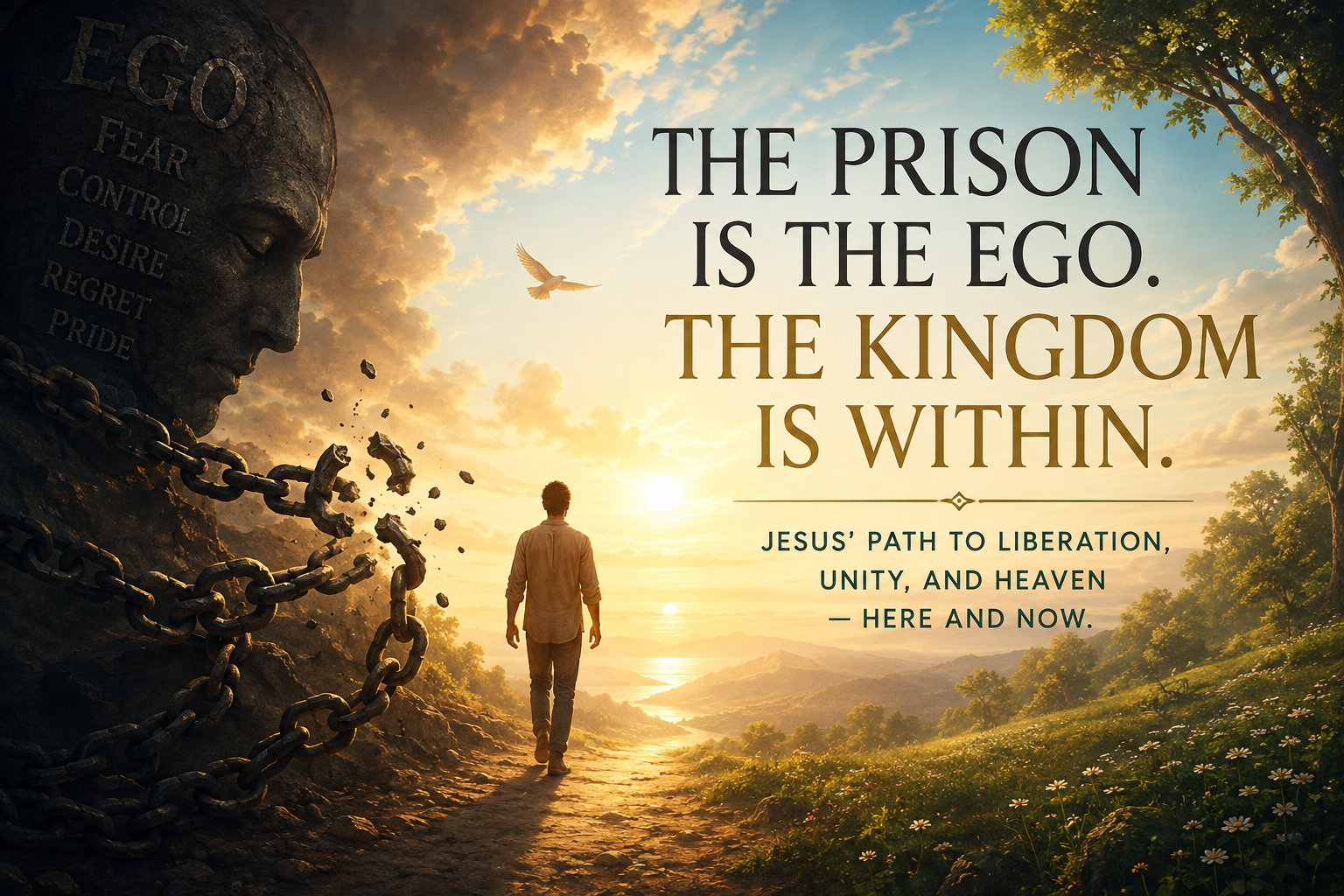
What the story is actually doing — and doing with considerable sophistication — is illustrating humanity’s shift from unified consciousness into ego-driven, individualistic awareness. The fruit of the Tree of Knowledge represents the birth of intellect and self-awareness. Satan, in this reading, is not a literal demonic being. He is a symbol of the ego itself: the internal force that, as we mature, prioritizes individual identity and separation over unity with all things. Original sin, understood this way, is not a supernatural stain inherited at birth. It is a metaphor for the human condition of living under the ego’s dominance rather than in conscious union with the universe.
This interpretation doesn’t diminish the story. It restores its actual power. And for Christians worried that rejecting a literal reading places them in spiritual jeopardy — it is worth asking honestly whether a loving God would condemn someone for thoughtful reflection. No passage explicitly states such a punishment, and the premise contradicts what Jesus himself taught about the nature of God.
The same allegorical lens applies throughout Genesis. The Tower of Babel is best understood as a symbolic account of humanity’s fragmentation into separate tribes and languages — an early attempt to explain linguistic diversity in narrative terms, what we now study as diachronic linguistics. The great flood narrative is not unique to the Bible at all; near-identical stories appear across ancient cultures, most notably in the Epic of Gilgamesh, which predates the biblical account. That parallel further confirms the folkloric rather than historical nature of the text.
None of this requires abandoning spirituality. Accepting the scientific realities of human evolution, the age of the Earth, and the natural development of language does not conflict with genuine spiritual life — it only conflicts with a literalism that was never warranted by the texts themselves. Clinging to ancient narratives as factual accounts when the evidence against them is overwhelming does not protect faith. It cultivates suspicion toward knowledge and stunts the intellectual and spiritual growth those narratives were originally meant to encourage.
The deeper problem with literalism is what it produces in practice: adults interpreting demons as actual supernatural predators, Satan as a physical adversary, and God as a bearded authority figure in the clouds. These were metaphors crafted for a pre-scientific world doing its best to articulate truths it couldn’t yet name. Treating them as literal reality is not devotion — it is a failure to honor the intelligence embedded in the original symbolism.
What sits at the center of all of this, transcending the entire debate over biblical interpretation, is the teaching of Jesus. Like the Buddha and other great spiritual teachers, he was pointing humanity back toward the state of awakened, unified consciousness that the Eden allegory describes as existing before the ego took hold — before the fruit was eaten, before the separation began. His instructions were designed to reverse that fall: not through mythology or institutional doctrine, but through the lived practice of ego transcendence, forgiveness, compassion, and the restoration of our oneness with God, each other, and the universe.
That teaching doesn’t require a literal flood or a talking snake to be true. It stands entirely on its own.
- It should be noted the Sumerians essentially taught a very similar story the story of the Garden of Eden in roughly (2100 BCE), although the Sumerians themselves did not use the name “Eden” for a paradise, they had myths of Dilmun, a paradise-like land with features closely resembling the Garden of Eden. The idea of Eden in the Bible is likely influenced by or built upon these older Mesopotamian traditions. “Enki and Ninhursag” was written c. 2000–1750 BCE. It contains key elements (paradise, divine disobedience, consequences) that predate and echo the biblical Garden of Eden story, which was likely written down around 600–500 BCE during the Babylonian exile.
- The Epic of Gilgamesh (2100 BCE) was arguably the origin/first instance of the story that told what was essentially known later in the bible as Noah’s Ark. It was written many years prior to the Noah’s Ark Story. (600 BCE). It was not uncommon for stories to be told and passed along different cultures and modified along the way so it’s not surprising to see very similar stories. In Gilgamesh, The gods decide to destroy humanity with a flood because humans are too noisy and disruptive. In Noah (Genesis): God decides to destroy humanity because of their wickedness and corruption.
Many Blessings Your Way! Join my mailing list if you want occasional updates.
I do not spam email boxes and will not try to sell you anything!



Leave a Reply