
Here Are The Actual Directions To Follow. It Goes Beyond Just Simply Declaring Jesus Is Your Savior:
- A spiritual awakening is available to all, but only you can initiate the process. For those who doubt, give it a sincere effort—the results speak for themselves. Begin by asking the Holy Spirit for genuine guidance in self-realization, self-awareness, and self-correction. Humbly seek help in identifying the attitudes, actions, thoughts, and habits that are egotistical, amoral, or self-serving—those that have led you away from unity with the universe, our shared source. Ask to awaken to your true self and the true nature of reality. Ask to see clearly where you’ve fallen short and where your ego’s grip has misled you. This act of asking is itself an expression of humility. Then, request help in correcting these missteps—not from a place of guilt, but from a place of desire to grow and align with your higher self. Express remorse for any harm caused, and hold the sincere intention to change. Ask the Holy Spirit to take you by the hand, to guide and walk with you on the path of inner transformation. Be clear and deliberate in your thoughts—this is prayer in its most honest form. Make peace with anyone with whom you have long-standing unresolved conflict. Don’t be afraid to reach out directly to do this. The goal is always to demonstrate humility—especially when mending broken relationships. Release guilt as you make amends; ask to be absolved of what no longer serves you. The past has already passed. Let it go. You are now being led forward by the greater Spirit of the universe. While your ego constantly demands control of what’s to come, true awakening requires the courage to relinquish control and instead be guided. It is the ultimate act of humility: to surrender and trust in something greater than yourself.
- Let go of attachments to material possessions and wealth declare that it no longer belongs to you, but the universe and declare that it be used in whatever way it sees it.
- Forgive others—even for the smallest of infractions. Do not surrender to fleeting emotions like anger, resentment, or the desire for petty retaliation. Far too often, people allow minor slights—such as a delayed reply, an unreturned favor, or a missed gesture of courtesy—to stir unnecessary bitterness. Yet these seemingly insignificant moments are powerful opportunities to practice forgiveness. True forgiveness is not reserved solely for life’s most devastating wounds; it is just as vital in the countless minor offenses that quietly provoke the ego. Each one offers a sacred chance to transcend pettiness and choose peace instead.
- Demonstrate humility by relying less on your ego and more so on the Holy Spirit. Your ego by nature wants total control of all things, present and future, train yourself to earnestly rely on the holy spirit. Explicitly ask for its guidance and declare that you trade in your will for the will of our father and the guidance of the Holy Spirit instead.
- Routinely call upon the Holy Spirit for guidance and support, and practice surrendering to the greater will of the universe rather than clinging to the ego’s illusion of control through free will. As Jesus wisely exemplified in his prayer, the words “Thy will be done” are not mere rituals—they are a profound act of trust and humility. In uttering them with sincerity, you consciously choose to be led by a force far wiser and more expansive than your individual mind. Make this declaration with intention: entrust the unfolding of your future to our greater Source—the divine intelligence of the universe with which we are inseparably one. To do so fully, release all fear. Let go of the need to control, and instead allow yourself to be carried by the current of something far greater than ego. In that surrender, true freedom begins.
- Declare in your consciousness: “My life and future is in the hands of our father, the universe whom we are all one with. My body and mind remains the home of the Holy Spirit, guiding me in the path the greater universe wants me to be on”
- “My body and mind remains home for the spirit of the universe, guiding me on the path determined for me, keeping me in harmony with the universe that is our greater father”
- By earnestly choosing to rely on the Holy Spirit rather than the ego for guidance, you allow yourself to release all fear, resting in the assurance that you are being led along the path most aligned with your highest good. Let go of the ego’s relentless need for control, and the anxiety it breeds through its obsession with the uncertain future. Instead, place your trust in the Spirit of God, and ask to be gently dissolved of all fear. In that surrender, peace and clarity will begin to unfold.
- In releasing all fear, remember also to surrender your fear of death. You are an eternal being—unbound by the temporary form of the body or the fleeting voice of the ego. Though these outward expressions may pass, life itself continues, seamlessly and without end. Holding this truth in your heart allows you to gently loosen your attachment to the body and ego, and in doing so, dissolve the fear of death. To sincerely release that fear is a profound milestone on the spiritual path—one that brings you closer to the freedom and peace of your true self.
- In relinquishing control of the future to the future and forgiving others from the past you can now live comfortably in the present moment, where the infinite resides and where true happiness lies.
- Love others, everyone you cross paths with as you love yourself, as we are all one.
- Do not judge others—regardless of the circumstance—for judgment only breeds division. Whether it’s someone you instinctively perceive as unattractive, someone dressed provocatively, heavily tattooed, intoxicated, or a person experiencing homelessness, resist the ego’s impulse to deem them lesser. The temptation to see ourselves as superior is a subtle but destructive illusion, one that fractures the truth of our shared humanity. Each act of judgment creates separation where there should be unity, reinforcing the false notion that we are distinct from those we are, in essence, one with. Become mindful of this habit, especially in a society where such judgments have become so normalized they go unquestioned—even among those who profess to follow a faith rooted in love and compassion. To withhold judgment is not just moral restraint—it is a sacred act of remembering that we all arise from the same divine source.
- Demonstrate mercy towards others. Empathy and mercy acknowledges our shared humanity and moves us collectively together towards a society and species where we are in harmony and at peace towards each other. This inches us closer and closer towards collective peace the more we exhibit it.
- Demonstrate virtues and qualities of the meek like empathy, generosity, humility, compassion and gentleness instead of anger and aggression.
- Take care of the poor and less fortunate people. When you cross paths with a panhandler or homeless person, don’t hesitate to help them in any way that you can. Buy them a sandwich from a street vendor, give them a few dollars, anything you can do to help restore your harmony and oneness with humanity and the universe. So take care of strangers, not just people you don’t know.
- Seek justice and demonstrate righteousness
- Choose and advocate for the peaceful path at every opportunity. Avoid conflicts fights and arguments
- Putting others before yourself is priority and will inevitably come back to help you, demonstrating total selflessness.
- Love your lord God, our Father with all your heart, mind, strength.
These all fall under the umbrella of being a peacemaker, consistently choosing peace over discord. The natural order of the universe includes order, peace, love, and unity. Therefore, any action that maintains this order leads to spiritual fulfillment. Avoid indulging in ego and negative emotions like anger, hostility, aggression, and resentment, as they sow discord in one’s own life and others.
Editorial:
How many Christians genuinely practice and integrate these principles into their daily lives? Sadly, very few. Many assume that simply declaring belief in Jesus absolves them from actually following his teachings. Yet Jesus Christ—revered across the world—not only preached faith, but more importantly, called on humanity to embody love, compassion, humility, and forgiveness. He taught the importance of invoking the Holy Spirit for divine guidance and living in accordance with the values he modeled. Notably, he directed prayer toward the Holy Spirit and our greater Father—the universe itself—and never instructed his followers to pray to him personally. In today’s religious landscape, many who profess Christianity openly contradict its core tenets. They proclaim devotion to Jesus while spreading hatred or judgment toward those they deem different. This contradiction reveals a troubling hypocrisy: claiming the name of Christ while ignoring the path he laid out.
The path Jesus laid out is not an easy one—it demands humility, forgiveness, and a steadfast commitment to embodying his virtues. Forgiveness itself is a profound act of humility, and seeking the guidance of the Holy Spirit offers clarity and direction amid life’s complexities. Christianity often appeals through its promise of salvation by faith in Jesus, a concept that may seem simple or even effortless to outsiders. But Jesus never taught a path devoid of responsibility. His message was not one of mere belief, but of transformation—calling us to live each day with love, integrity, and compassion. True faith is not found in empty declarations, but in the quiet, consistent practice of his teachings. When evaluating the health of any spiritual community, the clearest signs of authenticity are peace, love, and humility—not noise, division, or pride. Reflecting on American Christianity, in particular, raises important questions: Are we truly living by the virtues Jesus embodied, or merely invoking his name while neglecting his spirit? These questions deserve sincere contemplation—from both the faithful and a nation still searching for unity amidst division.
So Why Are Jesus’ Instructions for A Spiritual Awakening Getting Skipped by Many?
Why? Because the vast majority of Christians today are not truly following Jesus’ instructions for spiritual awakening. If you were to ask the average Christian—or even many pastors—what is required to attain eternal life, the common answer would likely be: “You must declare your belief in Jesus as the Son of God and acknowledge his death and resurrection on your behalf.” Mainstream Christianity often presents this as the sole requirement for salvation. But this formula, while widely accepted, does not reflect the deeper truths of what Jesus actually taught his followers. Nowhere did he reduce eternal life to a mere verbal declaration of belief. His true teachings were far more transformative—focused on inner renewal, selflessness, and the active pursuit of a life aligned with divine will. Simply put, belief alone is not enough. The path to eternal life lies not in professing faith with words, but in living his message through action, humility, and spiritual awakening..
Unfortunately, those who reduce their entire spiritual journey to simply declaring, “I accept Jesus,” without embracing or practicing his teachings, become poor ambassadors of his message. By neglecting the very principles he embodied—love, humility, forgiveness, and inner transformation—they miss the path to true spiritual awakening. As a result, we often see large groups of self-proclaimed Christians engaging in judgmental or even hateful behavior, while confidently assuming their salvation is secured—because of a bumper sticker, a church membership, or a verbal declaration. But salvation, as Jesus taught, is not guaranteed by outward symbols or words alone—it is realized through the inner work of living his truth daily. Without this, the spirit of his message is lost, and his name is invoked in ways that contradict everything he stood for.
Jesus makes this explicitly clear when he says: “By their fruit you will recognize them. Not everyone who says to Me, ‘Lord, Lord,’ will enter the kingdom of heaven, but only he who does the will of My Father in heaven”.
Faith in God without actually applying anything we were advised to do by Jesus is dead, or to be more specific:
“Faith without works is dead” is a phrase that comes from the New Testament, specifically from the James 2:14-26. It emphasizes the idea that genuine faith in God must be accompanied by actions that reflect that faith. Simply believing without living out that belief through good deeds and moral behavior is considered incomplete. It highlights the importance of integrating faith and actions to demonstrate true commitment and righteousness.
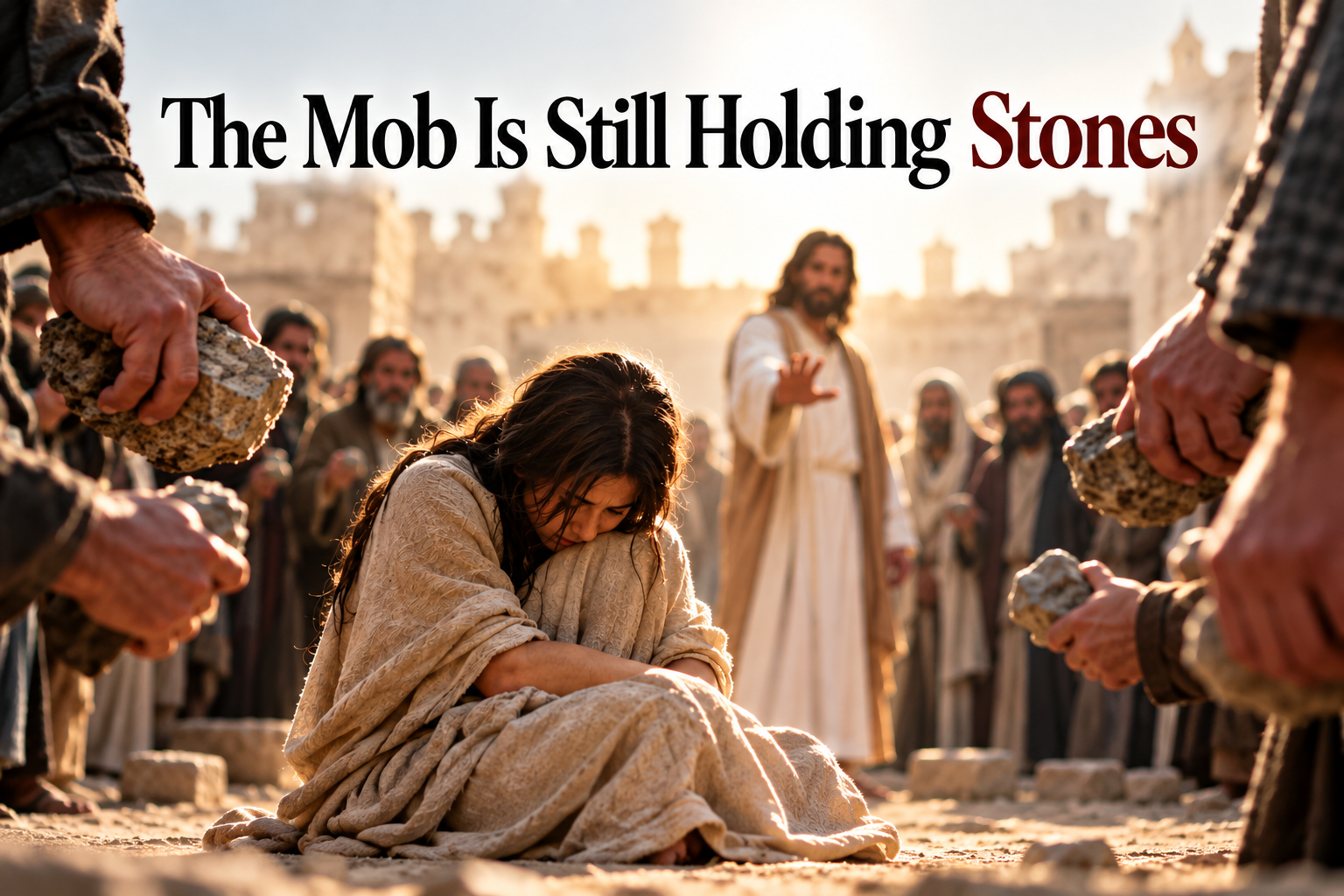
The notion that “Jesus already died for me, so I can do whatever I want” has become far too common in modern Christianity. But if his death alone were all that mattered, there would have been no need for the profound teachings he spent his life imparting—teachings that centered on awakening from ego-driven consciousness and restoring unity with the divine. Jesus did not simply offer a passive gift; he laid out a path to transformation, one that requires sincere effort and inner work. Salvation may have been made accessible through his sacrifice, but it is not automatic—each of us must still walk the path he illuminated. The road was paved by Jesus, but the toll is paid through living his teachings. What drew multitudes to him during his lifetime wasn’t just his promise of eternal life—it was the life-changing power of the spiritual awakening his message unlocked. If more modern Christians earnestly followed his instructions, they too would begin to experience the transcendence, clarity, and peace that so deeply moved his original followers. Only through practice—not mere belief—can one truly grasp the depth of what he came to reveal.
The widespread belief that merely believing in Jesus guarantees eternal life largely stems from a verse in the Gospel of John, which states, “Whoever believes in him shall have eternal life.” However, this passage has been deeply misunderstood for nearly two millennia. A closer, more accurate interpretation reveals that eternal life is not granted through belief alone, but through a life that reflects and follows the teachings Jesus imparted to his followers. This misinterpretation has had far-reaching consequences. The language in John’s Gospel, when taken at face value, appears to set a low bar for salvation—suggesting that a simple declaration of belief is sufficient. As a result, countless Christians overlook or dismiss the very heart of Jesus’ message: the Sermon on the Mount, the Beatitudes, the call to forgive, to love one’s enemies, to live humbly and selflessly. By mistaking belief for transformation, many have reduced Christianity to a passive ideology rather than an active spiritual path. But Jesus did not come merely to be believed in—he came to be followed.
So, according to John, eternal life is gained through simply believing in Jesus. But what did Jesus himself actually say you had to do to gain eternal life?
To Elaborate Further:
Let Go Of Attachments
Jesus spoke about letting go of attachments in several passages, emphasizing the importance of prioritizing one’s relationship with God over material possessions and earthly ties. Here are some key teachings:
- Matthew 6:19-21: “Do not store up for yourselves treasures on earth, where moths and vermin destroy, and where thieves break in and steal. But store up for yourselves treasures in heaven, where moths and vermin do not destroy, and where thieves do not break in and steal. For where your treasure is, there your heart will be also.” Jesus encourages focusing on heavenly treasures rather than earthly ones.
- Luke 14:33: “In the same way, those of you who do not give up everything you have cannot be my disciples.” This statement underscores the need to be willing to let go of possessions and attachments to follow Jesus fully.
- Matthew 19:21-22: Jesus said to the rich young man, “If you want to be perfect, go, sell your possessions and give to the poor, and you will have treasure in heaven. Then come, follow me.” When the young man heard this, he went away sad because he had great wealth. This interaction highlights the challenge of relinquishing material wealth to follow Jesus.
- Luke 9:23-24: “Then he said to them all: ‘Whoever wants to be my disciple must deny themselves and take up their cross daily and follow me. For whoever wants to save their life will lose it, but whoever loses their life for me will save it.’” Jesus speaks about the necessity of self-denial and the willingness to lose one’s life for His sake to gain true life.
- Matthew 10:37-39: “Anyone who loves their father or mother more than me is not worthy of me; anyone who loves their son or daughter more than me is not worthy of me. Whoever does not take up their cross and follow me is not worthy of me. Whoever finds their life will lose it, and whoever loses their life for my sake will find it.” Jesus emphasizes the need to place Him above even familial relationships.
Extending Love To All Others, Because We Are All Literally One.
In Luke 10:25, a lawyer asks Jesus a crucial question. The passage reads:
“On one occasion an expert in the law stood up to test Jesus. ‘Teacher,’ he asked, ‘what must I do to inherit eternal life?’”
This question sets the stage for Jesus to teach an important lesson about the greatest commandments and, subsequently, the Parable of the Good Samaritan. Jesus responds by asking the lawyer what is written in the Law and how he reads it. The lawyer answers:
“Love the Lord your God with all your heart and Love your neighbor as yourself.”
Jesus tells him that he has answered correctly and that if he does this, he will live. This highlights the importance of love for our Father (the greater universe) and love for others as foundational to inheriting eternal life.

Many blessings your way!



Leave a Reply