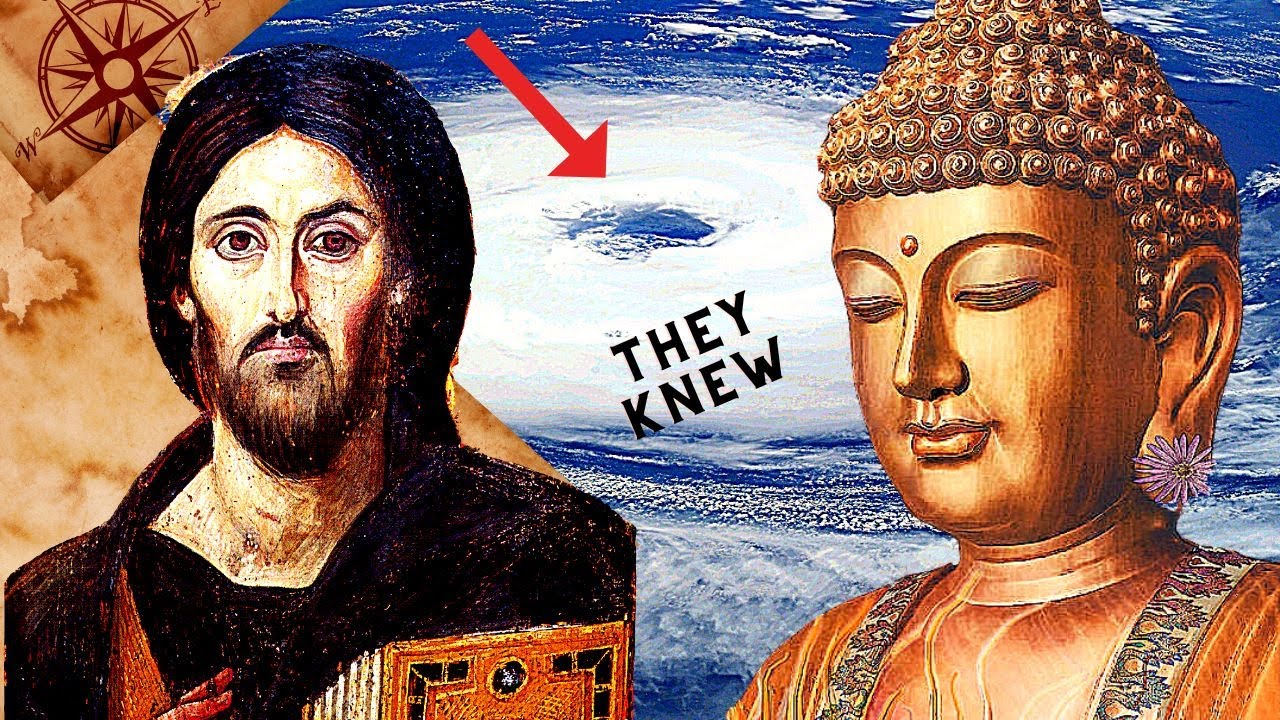
If Christians ever ponder how Buddhists achieve spiritual enlightenment—what Jesus referred to as Heaven—without needing to declare that they accept Jesus. Despite attempts by some Christians to emphasize an ‘us versus them’ mentality over unity, there is significant overlap in both of their teachings.
Both faiths share similar paths to spiritual truth and awakening, provided Jesus’ teachings are faithfully followed—embracing peace, eschewing anger, hatred, judgment, revenge, and grudges.
Neither Jesus nor Buddha instructed their followers to worship them. Instead, both focused on guiding people towards spiritual fulfillment through virtue and spiritual practice, emphasizing connection with the divine or universal spirit for guidance.
Buddhism encourages adherents to embody what Jesus termed ‘peacemakers’—individuals consistently choosing peace over conflict. It should be noted that in the modern era, this also means applying this principle in both digital spaces and in real spaces.
No one particular faith can assert ownership over universal virtues shared across faiths. Our father (the universe) does not prioritize which spiritual label one applies on oneself on their path to truth; what matters is embodying virtues like compassion, mercy, forgiveness, and peace. Many Christians overlook the fact that Buddha’s teachings predate Jesus by about 500 years.
Key Overlaps Between Their Teachings Include:
Karma: Jesus recognized and taught the universal law of Karma, albeit using different terminology than Hinduism or Buddhism. His emphasis on turning the other cheek and performing acts of kindness reflects an understanding that positive or negative actions inevitably return to impact one’s life profoundly. This principle underscores his teachings on empathy, compassion, and forgiveness, emphasizing that these virtues yield reciprocal benefits.
In essence, Jesus incorporated the principles of Karma when instructing his followers to be generous and compassionate, particularly towards the less fortunate. Actions rooted in retaliation or kindness reverberate through one’s life—a concept universally acknowledged across faiths long before Jesus’ time.” It could be argued that many Buddhists are faithfully following Jesus’ teachings moreso than self proclaimed Christians that spread hatred and angry vitriolic/divisive rhetoric.
Hell – In Buddhism, suffering (dukkha) is recognized as inherent in human existence and can be transcended through the practice of the Four Noble Truths. These truths bear similarity to Jesus’ teachings in the Sermon on the Mount. It’s plausible that what Jesus describes as Hell corresponds to the human suffering acknowledged in Buddhism and Hinduism. Both traditions propose that suffering can be overcome during one’s lifetime, contrasting with the Christian misconception that Heaven is in the afterlife. By adhering to the Four Noble Truths or Jesus’ teachings in the Beatitudes, individuals can effectively transcend the suffering referred to as Hell or Dukkha in their respective religions.
Compassion and Love
- Demonstrating Empathy and Loving They Neighbor
- Loving Your Enemies
- Humility & Servitude
- Humility demonstrating a total relinquishment of one’s ego. Putting others before yourself is the ultimate demonstration of being selfless and casting your ego aside. Letting go of attachment to your identity and our separation from others and the universe is crucial towards this end.
- Non Attachment
- Buddhism is well known for encouraging non-attachment, and Jesus was no different. He articulates this in his metaphor of the Camel through the Eye of A Needle, how attachments to wealth will make one’s spiritual journey incredibly difficult. He prioritizes spiritual growth over material wealth as well.
- Forgiveness/Reconciliation
- Both Jesus and Buddhism implore that people forgive to attain spiritual peace. Forgiveness is synonymous with Jesus, but Buddhism also shares this virtue. Forgiveness is one of the most devastating blows to your ego that you can make, as well as demonstrating the ability to choose the path of peace instead of conflict/resentment which is one of the critical steps in attaining spiritual enlightenment.
- Inner Transformation/Ethics
- Both faiths push/encourage universal ethics and virtues. Honesty, Purity, Righteousness, Mercy, Honesty, Integrity, Giving to needy, Demonstrating Humility, Seeking peace rather than Conflict & Anger, Avoiding Judgements of Others
Considering the significant overlap in values and virtues between the teachings of both faiths, it becomes clear why both paths can lead to spiritual enlightenment or awakening, akin to what Jesus referred to as Heaven. When individuals who claim to follow Jesus consistently violate these virtues and lessons, they are merely followers of Jesus in name only.
Sign up to awaken from the dream
effectively use spiritual practices to actually awaken from the dream






Leave a Reply