
The Teachings of Jesus Versus the Religion Built Around Him
Jesus was not a champion of religion. Nowhere is this clearer than in the simple fact that he never founded one. During his life he organized no institution, established no creed, and appointed no hierarchy. That choice was entirely consistent with his teaching, which returned again and again to unity and to our oneness with one another. Jesus is best understood as a spiritual teacher who taught spirituality, not as a religious figure or an advocate for religion, which so often turns toxic.
That toxicity is easy to find. It fills our history books, and it runs through the evening news, where the culture wars, especially here in the United States, are reported daily. Christians regularly cite the Bible to justify hatred and the marginalization of others, cherry-picking the verses that support the political views they already hold.
This is the consequence of turning Jesus into a religion to identify with, rather than preserving his message as it began: a set of spiritual guidelines, free of the conventions and poisons that religion tends to carry. Religion, at its core, is tribalism with a tinge of spirituality. For that reason, Christianity today is better described as a religious tribe devoted to worshiping Jesus as a person than as a way of life that asks its followers to live by what he taught.
The religion of Christianity was built years after his death by people who believed they had the authority to add to and alter his core teachings. In doing so, they lost sight of the message at its heart: unity and oneness with everyone.
We must therefore draw a clear line between the teachings of Jesus and Christianity, because they are not the same thing. The moment you identify with a religious group, you join a tribe, and that tribe separates you from the rest of humanity. Jesus, by contrast, reminded his followers constantly that we are all one. A teacher who spoke often in metaphor and symbol, he described all of us as God’s children, which is to say that we are one, reflections of the same source. He was not claiming a status reserved for himself alone; he was telling each of us that we, too, are sons and daughters of the God he called our Father. The moment you sort yourself into groups that set you apart from others or rank you above them, whether by religion or any other category, you have broken the most basic principle of his teaching.
This is what made the Jim Crow era so ironic and so tragic in a nation that called itself Christian. Masses of Christians built hierarchies of superiority in their minds, passing judgment on others as inferior and refusing to accept their shared unity as children of the same Father. The same people who carried signs defending segregation also carried signs declaring their faith. That distortion of Jesus’s teaching continues today, in even harsher forms. Some Christians now insist that Jesus would support laws to punish and turn away the stranger, and that he would champion weapons, despite his own command to put down the sword. We could go down the list of his teachings that are routinely trampled by those who claim his name, but the conclusion is the same: Christianity as it now exists has drifted far from what Jesus taught and has become something that welcomes hateful ideas. Christianity as a religion should be set aside, and the teachings of Jesus followed on their own. Let go of the ego’s urge to belong to a religious group, and simply embrace and live by the clear guidance he gave.
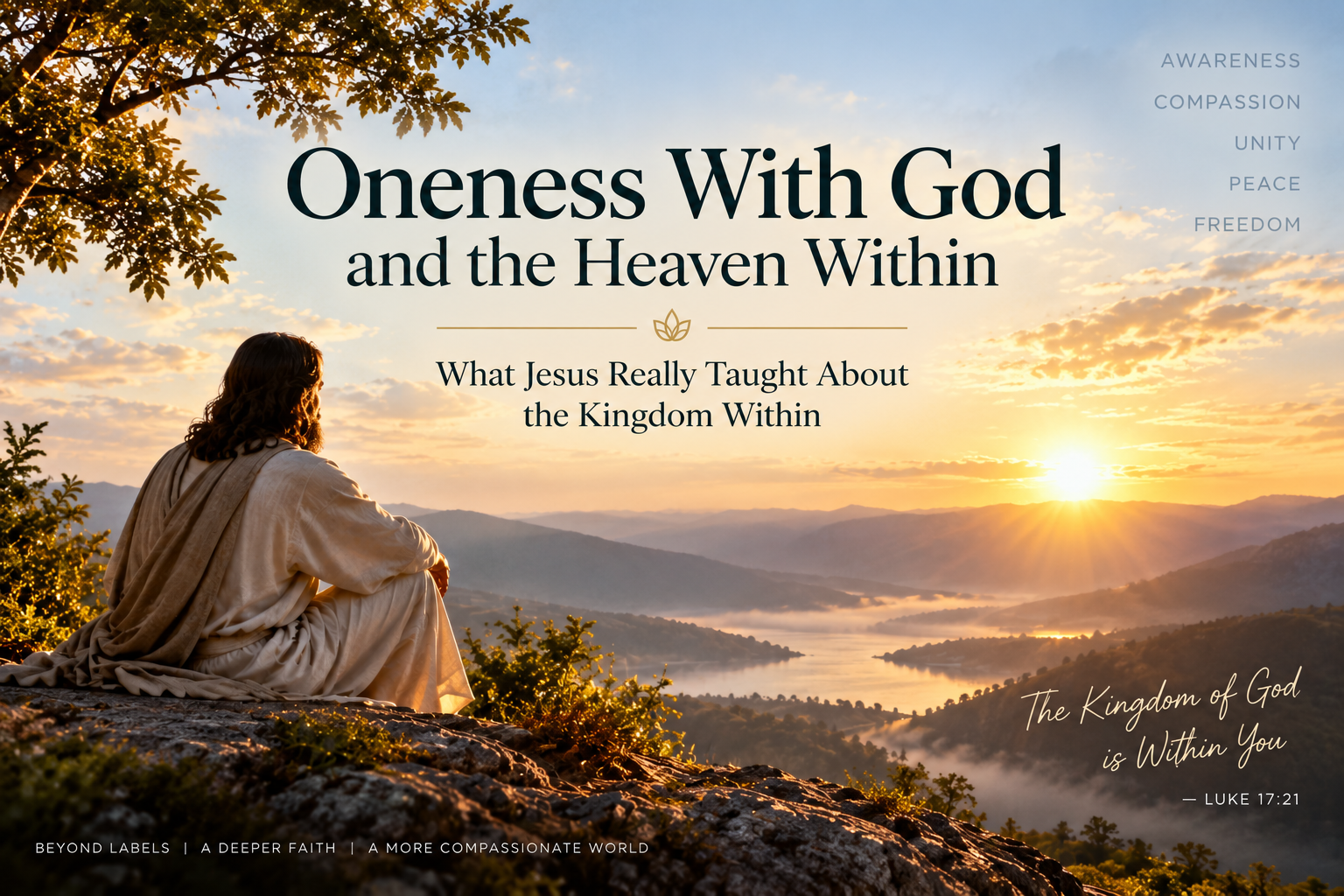
In this respect, Jesus’s teachings closely resemble those of the Buddha. The two overlap to a remarkable degree, and, like the Buddha, Jesus did not make himself the object of worship. He offered guidance to live by. In Buddhism, as in Jesus’s original teaching, the emphasis falls not on membership in a religious tribe but on practice and realization. Search the teachings of either man for instructions to worship him or to join his faction, and you will come up short. Both pointed instead toward an awakening, and both were clear about where that awakening is found: not in some distant place or in another life, but within us. When asked when the kingdom of God would come, Jesus answered that it would not arrive with signs to be observed, because “the kingdom of God is within you.” The Buddha taught the same truth in his own language. Nirvana is not a realm to be reached somewhere else; it is a freedom realized inside one’s own mind, through one’s own practice. As he neared the end of his life, he told his followers to “be a lamp unto yourselves” and to seek refuge in no one outside themselves. Two teachers, from two different cultures, both directed their students inward to the same source of peace.
Buddhism gets something essential right when it teaches that this inner peace is available now. Christians, meanwhile, are routinely taught that the bliss of heaven arrives only after death, even though Jesus declared plainly that “the kingdom of God is at hand.” At hand means here, now, within reach. Put that beside his words that the kingdom is within you, and his meaning is unmistakable: heaven is neither far off nor postponed. It is present, and it is inside us. Yet in the centuries since his death, teachers have either misunderstood him or deliberately led new believers astray.
The path to this realization is simple, and both traditions share it: accept your unity and oneness with all other people, and recognize that together we are one with our source. Return to that truth often in your own awareness. Racism and other hateful thinking block the way to the heaven, or nirvana, within us, because they feed the illusion that we are separate and that some people are worth more than others. There is no way that those who paraded crosses through the Jim Crow and Klan eras were touching the inner kingdom Jesus spoke of so often, because they chose separation over unity.
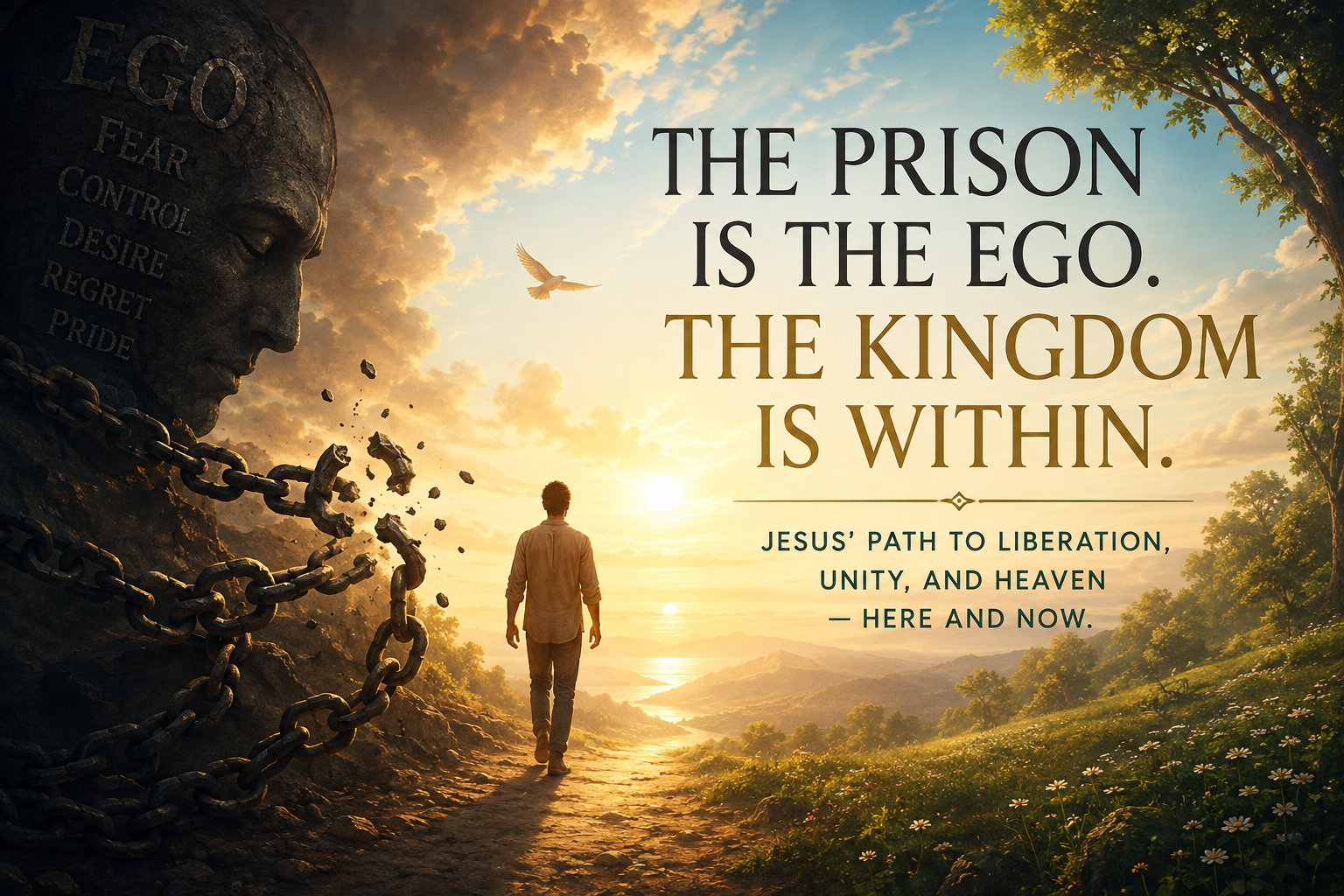
It is essential, then, to let go of religious labels. Keep a set of spiritual principles to live by, but release the ego’s need to belong to a faction. The only group worth embracing is the whole human family, and together we are one with God, our source. The moment we judge others as inferior, or even as superior, we raise a wall that keeps us from seeing the truth: there is no hierarchy. We are all equally and fundamentally one. There is no separation between us, and no one should ever convince you otherwise.

Leave a Reply