
Channeling The Holy Spirit
The Universe/God always encourages and rewards positive / collaborative / unifying behavior and decisions that always benefits the greater whole, choosing the path of peace rather than conflict.
Here are some habits to develop
- Invoke the holy spirit in your mind to guide your mind, your thoughts, decisions and to guide you into the future. Surrender control of the future to the holy spirit
- Declare and accept your body as the home and tool for the holy spirit to utilize
- Surrender to the will and plan of God/The Universe, and ask the holy spirit to keep your life in alignment with the ultimate plan of our Father.
- Always select the path of peace when faced with any decision where you can conflict with someone or avoid it. (Blessed by the Peacemakers)
- Letting go of attachments to material possessions and wealth.
- Forgive others, even for the tiniest infraction, do not give into emotions like anger or seek petty retaliation.
- Love thy neighbor, everyone you cross paths with, treat them as you would yourself and family. Do not treat others with animosity or aggression.
- Do not judge others
- Adopt the spirit of the meek over the spirit of aggression.
- Take care of the poor & homeless. This includes poor beggars on the street, every day you have an opportunity to replicate what Jesus illustrated in The Good Samaritan Tale, so help them in any way that you can. Do not do this in a way to attain egotistical glory.
- Take care of strangers, not just people you don’t know.
- Demonstrate humility by relying less on your ego and more so on the Holy Spirit.
- Demonstrate mercy towards others
- Demonstrate virtues like empathy and compassion and gentleness instead of anger and aggression.
- Seek justice and demonstrate righteousness
- Choose and advocate for the peaceful path at every opportunity. Avoid conflicts fights and arguments
Basic Truths To Accept/Adopt
- The reality is we are all in truth, one singular entity. We are all human incarnations of the universe that is God. We are all one and there is no death. Once you pass, another incarnation of the universe in human form arrives. We are physical manifestations of the universe, and that will perpetually manifest new human incarnations of itself through all of us, not just Jesus. Understanding that, you can let go of all fear of death. As perpetual manifestations of the universe, we are essentially eternal beings. You are charged during your time here with the task of successfully awakening to our true higher consciousness.
- It’s important to stop thinking of ego as simply being a synonym for being an arrogant, self-centered or selfish person. The ego is the personality/avatar developed by every person on this planet. Even your least self-centered/selfish person you know has an ego.
- Everyone has two paths in life
- A course set by our father the universe (sometimes referred to as destiny, etc. This life is full of joy and bliss)
- A self-determined course steered by your ego/intellect which can completely or occasionally deviate you from the predetermined path set by the universe for your life (more commonly referred to as your free will, reason, etc.)
- The Christian religion’s misinterpretation of Heaven is based on a misunderstanding that it is a spiritual or physical place only accessible post-death. In truth it is only Christianity’s word for what other religions and faiths have referred to as Nirvana, Enlightenment, Moksha, Zen, etc. ‘Heaven’ is the bliss that comes from finally achieving freedom from our ego consciousness and reattaining universal consciousness. Freedom from the pain of human suffering that comes from attachment to our human bodies and egos. In truth it can be experienced in your lifetime while you’re alive, with no need to wait until death. Anyone who tells you need to wait until you die to experience the bliss of Heaven is just perpetuating a lie and misunderstanding that’s been going on far too long. The ability to spiritual awaken your higher consciousness to experience Heaven was provided by instructions left by Jesus and it can be accessed within you in the near future.
- Understanding that “heaven” is a state of consciousness that connects you with the universe, and not a place you “go to” when you die, you must do more than just declaring “I believe in Jesus” to achieve this. You must put his guidelines into practice. “Do you accept Jesus as your personal savior?” is not enough.
- It was important to look into Jesus’ teachings directly. In some cases, doing so through a church means the message gets muddled and distorted and in the worst cases no longer resembles Jesus’ original teachings. In many cases, sermons may focus on Old Testament proverbs for general life advice, which is fine but little time is spent on mentoring people to surrender to God and properly utilizing the spirit of the universe.
- For those looking for constant citation/references to support some of the statements in this post. You won’t always find it because the New Testament is not a conclusive and final/finite piece of text with every possible truth ever contained in it. There’s going to be plenty of truths that are readily apparent, but never discussed or mentioned in the NT. If you read something below that seems reminiscent of an eastern faith, it’s because it’s true and to reject a truth because it overlaps with another faith is foolish.
The encouraging news is that pursuing a higher spiritual life doesn’t require abandoning your rational mind—the same mind you’ve relied on every day of your life.
Each person has a purpose and a path that the universe has laid out. Just as Jesus was chosen to help humanity awaken to the Spirit of God and rediscover our unity with all creation, each of us has our own path to follow if we truly want to emulate what he modeled.
And contrary to what many people assume, Jesus didn’t instruct anyone to worship him. Demanding worship would have been ego-driven. His mission was to teach us how to access the universal Spirit that’s available to everyone. He emphasized following his guidance so we could reconnect with God, the universe, and our true nature beyond the ego.
Even the line, “No one comes to the Father except through me,” isn’t a demand for loyalty to his identity—it’s a reference to the path he taught: surrendering the ego, aligning with the Spirit of God, and returning to unity with the Source. Simply calling Jesus a savior isn’t enough if you ignore the actual instructions he gave. His teachings point directly to choosing the Spirit of the Universe over the ego.
Jesus lived in alignment with the universe’s will by relinquishing control—by handing over the reins. That clarity allowed him to accept his own death, because he understood it as part of a greater plan. And just like Jesus, each of us has a purpose to fulfill.
For those who wonder why his death was “necessary” instead of everyone awakening instantly, it served as a catalyst—something powerful enough to shake society, spark change, and accelerate the spread of his message about liberation from the ego. His death wasn’t the point of the teaching—it was the event that amplified it. However, he did not die for anyone’s sins and he was not a sacrifice. These are teachings that cropped up later by people who wanted to add to the narrative was Jesus and his life.
This approach respects our free will while facilitating our reconnection with the universe. It allows humanity to retain intellectual autonomy and progress collectively while nurturing our deeper connection with the universe.
Relying solely on the ego to make decisions only deepens our alienation—both from each other as a species and from our inherent oneness with the universe. Jesus consistently emphasized teachings rooted in benevolence, empathy, and rediscovering the omnipresent Spirit within each of us. When he said the Kingdom of God is within, he was pointing directly to that innate connection we all have to the universe.
That deep fulfillment—what people have traditionally called “Heaven”—comes from re-establishing this connection by shifting our state of mind and learning how to access it internally. And choosing not to tap into it, despite it being available at all times, is like knowing there’s a happiness switch within reach and still choosing to live in misery.
This is also what the allegory of the Garden of Eden is really illustrating: humanity’s shift from complete unity with the universe—an ascended, egoless spiritual consciousness—into ego-driven consciousness. The Tree of Knowledge symbolizes that turning point, when we moved from intuitive unity into ego-based intellect, sacrificing blissful connection with the universe in the process.
Our intellectual evolution, fueled largely by the ego, has been a double-edged sword. On one hand, it enabled astonishing progress and achievement. On the other, it intensified the illusion of separation—from the universe and from one another—which is what many interpret as “Original Sin.” And that separation has played a major role in modern suffering, including anxiety and depression—both of which are often the direct products of an overactive, ego-driven mind.
The sense of individuality derived from operating within our egoic minds can become intoxicating. However, through Jesus’ teachings, we are reminded that fundamentally, we are all interconnected and inseparable, an objective truth that challenges the egos and belief systems of many.
The subtext of the parable of Adam and Eve is enticing us to journey back to our state of unified higher consciousness. We’re taught how terrific and euphoric everything is until we metaphorically trade it all away for our egos in the story. In the parable’s story, our suffering is explained as the abandonment of our original state of spiritual awareness and trading it for the limitations of an intellectual/ego-driven mind. In contrast, “Heaven” isn’t just something that happens after death. It’s a state of inner peace and bliss that becomes accessible right now through spiritual awakening by overcoming our false egoic selves.
For conservative or traditional Christians who feel uncomfortable with these interpretations, it’s worth acknowledging that many modern Christian beliefs already diverge from what Jesus actually taught. That’s why there’s an urgent need to reframe and clarify these ancient concepts in a way that modern people can understand, so they create deeper connection and trigger actual awakenings, rather than perpetual confusion and alienation.
A lot of the attachment to rigid interpretations, and the fear of thinking differently, comes from anxiety of some postmortem punishment. Simply put, seeking spiritual is not a crime. Since God is truly loving, it is inconsistent that he would condemn someone forever simply for trying to understand Jesus’ teachings more deeply.
Love cannot coexist with cruelty. A loving God cannot also be vindictive.
In summary, embracing a deeper spiritual understanding through Jesus’ teachings involves transcending ego-driven fears and recognizing our innate unity with the universe. This shift in perspective enables us to experience profound spiritual fulfillment and harmony, aligning with the universal truth of love and interconnectedness.
A Quick Recap of Terms For An Accurate Understanding of Biblical Teachings
God = The Universe and literally all that is. God and the Universe are interchangeable, and we are one with the Universe.
Heaven = The spiritual and conscious state of achieving total oneness with the universe, encompassing all existence, is a state of complete enlightenment through embracing and affirming nonduality — the recognition of unity with God and others as absolute truth. This state of being, often referred to as Heaven, is accessible in the present moment, contrary to the misconception perpetuated among many Christians that Heaven is exclusively attainable post-mortem.
Atheists, who rightly question the certainty of an afterlife, often reject spirituality and religion on the grounds of unverifiability beyond death. However, Heaven is not a destination reserved for the afterlife but rather a state of consciousness that can be realized now. Therefore, debates about the nature of existence after death become irrelevant when one can experience the essence of Heaven firsthand during their lifetime.
For those skeptics who require empirical evidence, the invitation stands to explore this state of consciousness immediately, bypassing the need to wait until death. By sincerely engaging with the teachings of Jesus, as distinct from the interpretations offered by modern churches, one can embark on a path toward experiencing Heaven or Enlightenment in the near future.
The concept of “The Kingdom of God” or “Heaven,” as described by Jesus, is not a literal kingdom or a physical place to which we journey after death. Instead, it symbolizes a spiritual and conscious state where one achieves complete unity with the universe, transcending the limitations of the body and earthly existence. Heaven, in this context, symbolizes the profound joy and elation experienced upon attaining spiritual enlightenment, reconnecting with the entirety of existence.
Historically, the term “heaven” has often been associated with the celestial realms beyond Earth’s atmosphere. However, in spiritual discourse, it metaphorically represents the ecstatic state of returning to a paradisaical existence, akin to the bliss described before humanity’s separation from the universe, as symbolized in the story of Adam and Eve.
This state of bliss and enlightenment, also known by various names such as Kundalini Awakening, Enlightenment, Spiritual Awakening, or Nirvana in different traditions, is termed “Heaven” in Judeo-Christian theology. Crucially, it is attainable during one’s lifetime through a shift from ego consciousness to higher/universal consciousness having attained oneness with the universe/god.
When Jesus proclaimed, “The Kingdom of God Is Within You,” he emphasized that this state of profound connection with the universe resides within each individual, accessible through internal spiritual growth rather than external means. His teachings employ poetic language and metaphors, illustrating that “Kingdom” refers to a conscious state of mind rather than a physical domain to enter posthumously, as often depicted in art and tradition.
Therefore, Heaven, as understood in spiritual enlightenment, signifies the fulfillment and bliss promised by reclaiming our inherent unity with the universe. This truth, reinforced by Jesus’ teachings, underscores that this state is accessible now, within one’s own existence, dispelling the misconception perpetuated over centuries that Heaven is only attainable after death.
Son of God = Jesus had a predetermined mission to guide humanity in utilizing the Holy Spirit to reconnect with the universe, yet he never intended to be worshiped or prayed to. In contrast to demanding reverence, he emphasized that all individuals are children of our father, while also deflecting any worship and praise. When Jesus consistently refers to himself, it is as the “Son of Man” he uses this term to denote his status as human, not as anyone special despite all the fanfare he received from the lives he was transforming. The misconception that Jesus alone is the “Son of God” has persisted for centuries, stemming from labels applied to him by Christians who took over the religion after the death of Jesus. Jesus made it explicitly clear that we are all our father’s children, so the title of “Son of God” could not exclusively be his by his own words, and it was a title given to him by people years after his death.
By proclaiming that we are all children of God, Jesus teaches that we share an equal divine connection to the universe, inseparable from our divine source. Terms like “Father” and “Son” symbolize our unity with the universe, challenging the illusion of separation fostered by our egos. The assertion that we are all sons and daughters of God may challenge conventional Christian beliefs today, yet it aligns with Jesus’ explicit teaching that we are all part of God’s family. Embracing this truth is not blasphemous but a rejection of ego-driven identities, affirming our unity with God and each other. Jesus himself prayed that his teachings would enable us to attain the same elevated consciousness he achieved (John 17:22). Furthermore, Jesus uses symbolic language to convey that we are manifestations of God by stating that we are made in God’s image. This symbolic representation invites us to recognize our inherent divinity and interconnectedness with the universe, transcending individualistic perceptions promoted by the ego.
“We’re all God in disguise. Jesus found that out, and they crucified him for saying so”
-Alan Watts
Having an attachment to our individuality and a belief in separation contradicts the essence of Jesus’ teachings, which emphasize our unity with all existence, including God/the universe and our fellow beings, with whom we are fundamentally interconnected.
For those who might perceive this perspective as blasphemous, it’s crucial to recognize that Jesus remains an immensely significant figure in history. He followed a path predestined by the Universe/God, serving as a profound conduit to guide humanity toward awakening to our true nature and our interconnectedness with all creation. Each person, upon voluntarily surrendering to the universe and the Holy Spirit, finds their own purpose and path.
Jesus lived a life ordained for him by God/the Universe, surrendering to the Holy Spirit to stay aligned with the divine plan. His journey fulfilled the Universe’s purpose for him, teaching us how to transcend our egoic consciousness through the guidance of the Holy Spirit. His death, in this context, was not a random event but a part of a greater design to spread his transformative message. Yet, misunderstanding or neglecting his teachings about surrendering to the Holy Spirit means missing the core of his message entirely. While acknowledging his sacrifice is important, true spiritual development, as Jesus taught, hinges on prioritizing the guidance of the Holy Spirit in meditation and prayer, rather than mere worship of him.
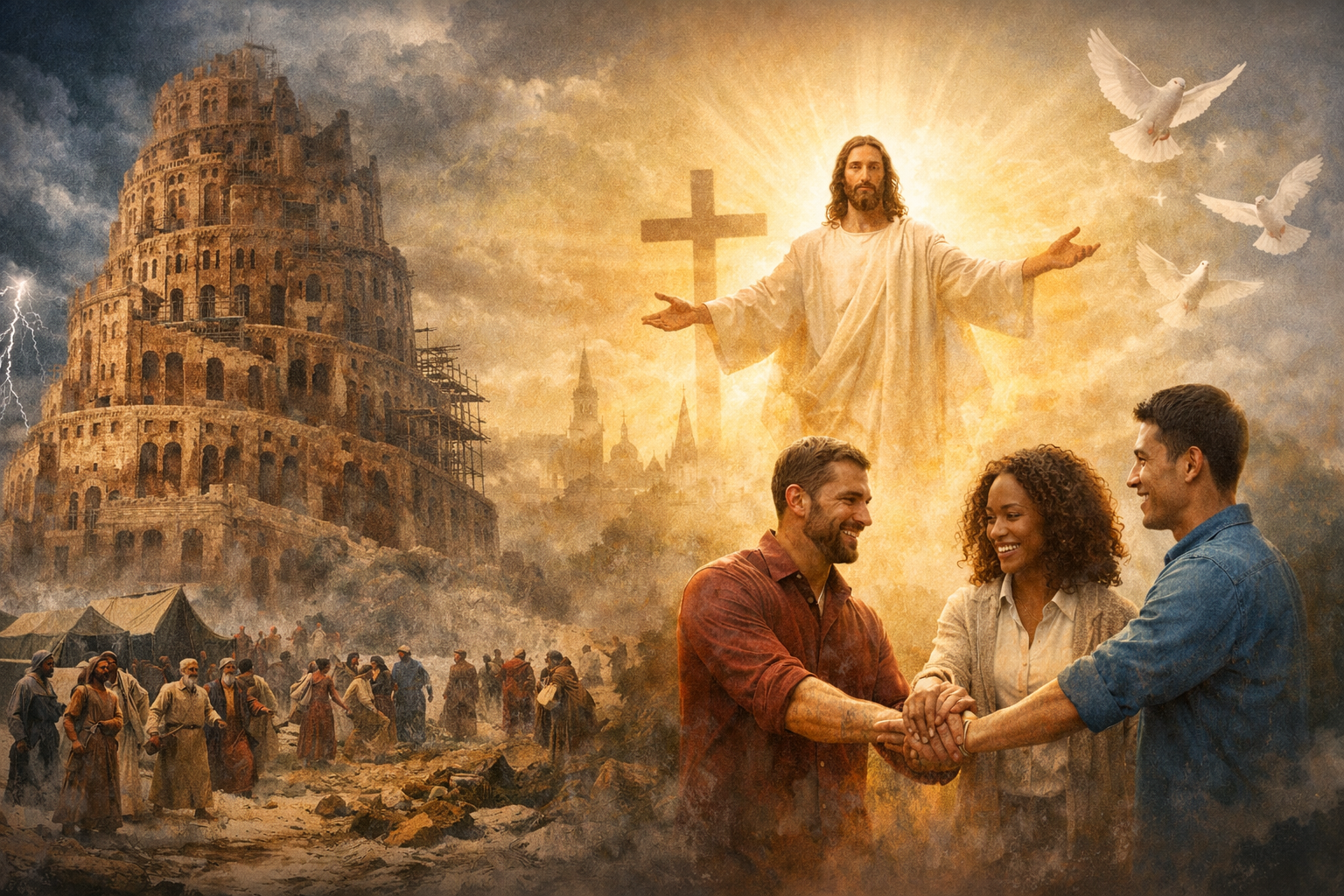
Jesus notably did not establish organized religions or churches, as doing so would have perpetuated divisions among humans, contrary to his teachings of unity. While community and collective worship are valuable, the formation of new organized religions or churches would have contradicted his message of fostering unity among all people.
Holy Spirit = What was Jesus referring to when he introduced the term “Holy Spirit”? It refers to another facet of the universe, also described as “the Spirit of God” or “the Spirit of the Universe.”
In contemporary terms, it can be understood as the omnipresent energy field permeating the universe, binding everything together as a unified whole. This energy not only surrounds us but also resides within each of us. It is the fundamental energy of the universe, characterized by pure love, accessible to all who seek it. When we operate predominantly from our ego consciousness, we remain disconnected from this energy. However, by relinquishing control to the spirit of the universe rather than our egos, we embark on a path toward truth and healing.
For those inclined toward scientific inquiry, the existence of this pervasive energy field need not rely solely on faith or spirituality. It can be explored and validated through personal experience. You can direct your meditations and prayers toward the spirit of God or the universe, affirming your connection to this energy. Scientific confirmation of this energy’s existence may yet come, possibly under a more scientifically grounded name like “Quantum Field,” affirming the insights of Jesus and other spiritual teachers millennia ahead of their time.
Jesus was not the first to recognize this universal energy. In Hinduism, it is known as ‘paramatma,’ described as the Supersoul present within all living beings, witness to all and source of knowledge, remembrance, and forgetfulness—an apt description of its essence.
This Holy Spirit, or quantum field, connects and guides us when we surrender our egoic control to it. Jesus’ parable of the prodigal son illustrates that no matter how distant we feel from it, our connection to this Holy Spirit remains intact. It is always accessible, even during times when we are unaware or disconnected from its presence. This universal essence within us connects all living beings and serves as the gateway to “Heaven” or Christ consciousness—an experience accessible in life, not just after death.
When Jesus speaks of our bodies as temples to the Holy Spirit, he underscores that the spirit of the Universe/God resides within each of us. Affirming this in our prayers and meditations acknowledges our perpetual connection to this divine essence, impacting our lives whether acknowledged or not. This quantum field is the invisible yet omnipresent mode of the universe, inviting exploration and verification through personal spiritual practice and scientific inquiry alike.
Forgiveness
Understanding and realizing the true nature of forgiveness involves navigating through inevitable challenges that test our ability to let go of ego-driven responses. The universe continuously presents these tests to gauge our attachment to our egos. Refusing to forgive serves as a clear indicator that our ego is in control, hindering our capacity for humility and obstructing pathways to peace.
Instances where our ego feels slighted, whether by passive-aggressive remarks or perceived disrespect, signal moments ripe for forgiveness. These feelings serve as cues to release grievances, either in the moment or during introspective practices like prayer or meditation later on. Recognizing and addressing these triggers—whether minor interruptions or more significant offenses—helps curb egocentric reactions and fosters a mindset conducive to forgiveness.
Resisting the temptation to act out of anger or indignation is crucial in these instances, as decisions made under such emotions often align with ego consciousness rather than a higher spiritual awareness. Acknowledging any discomfort or guilt arising from perceived wrongs offers further guidance for course correction, emphasizing the importance of processing and not suppressing these emotions.
Moreover, demanding respect and entitlements typically stem from a bloated ego, further underscoring the need to dismiss such sentiments and release any lingering resentments. Through forgiveness, even for those who challenge our ego, we gradually dismantle its grip over time.
In prayer, specific and mindful forgiveness holds greater meaning than generic or ritualistic expressions. Directing thoughts toward individuals with whom there have been conflicts or misunderstandings during these moments of forgiveness fosters genuine healing and release. This practice aligns with the teachings of Christ, emphasizing personal introspection and the transformative power of letting go.
In seeking spiritual guidance, it’s imperative to invoke the Holy Spirit explicitly by name, as instructed by Jesus. This practice ensures alignment with divine will and unity with the universal energy that connects us all. By directing prayers to the Holy Spirit rather than fixating on personalities, such as Jesus himself, we honor the universal essence that transcends individual forms. This approach not only respects the teachings of Christ but also deepens our spiritual connection and guidance in navigating life’s complexities.




Leave a Reply