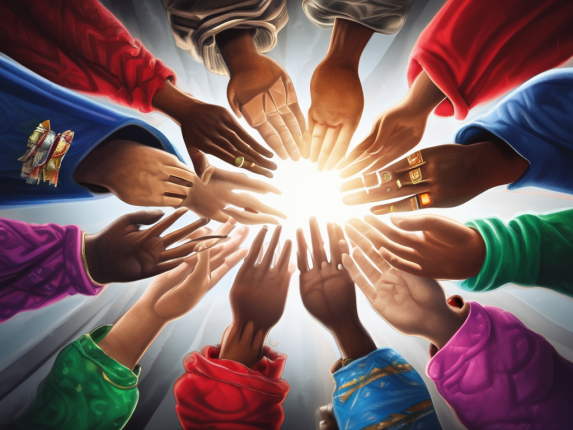
The creation of Kwanzaa has sparked debates about its impact on unity and unnecessary racial segregation. Its founders argue for creating spaces that affirm cultural identity, fostering a sense of solidarity among marginalized communities.
On the other hand, one could argue that such celebrations could inadvertently promote segregation by emphasizing separateness from other racial groups. The discourse underscores broader questions about inclusivity and unity in America’s cultural landscape.
Similarly, common sayings like “God Bless America” for the most part had good intentions but may also unintentionally promote and normalize needless separatism while promoting tribalism . While commonly viewed as a patriotic sentiment, it could easily be argued that it implies exclusivity, suggesting exclusive favor and blessings for only one country rather than extending goodwill to all humanity. For many there is an intrinsic implication that the blessing will perpetuate superiority towards people from other nations despite also being our brothers and neighbors according to Jesus’ own teachings. This interpretation challenges the ideals of inclusivity and universal blessing championed by Jesus.
Central to these discussions are the teachings of Jesus, who advocated for love and compassion towards all, including perceived adversaries. This call extends beyond national borders and political affiliations, urging individuals to pray for and bless those considered as enemies, political opponents, national adversaries or strangers. So yes, this would also include praying for Hamas, Israel, Russia, China, and so on if you’re going to adhere to Jesus’ teachings. People angrily yelling at those they have political disagreements with while wearing a Jesus T-Shirt is Unchristian and happens far too often.
In a nation often characterized as Christian, the emphasis on welcoming strangers and embracing diversity should be seen as integral to embodying Christian values. Any stance contrary to this principle undermines the core teachings of Christianity, which advocate for compassion and inclusivity across racial, national, and political divides.
As America continues to grapple with these complex intersections of faith, identity, and inclusivity, the dialogue remains crucial in navigating the evolving landscape of religious expression and cultural unity in a diverse society. However as Christians, there is only one path to advocate for and adhere to, which is complete unity with no segregation or separation between any of us.
Many Blessings Your Way! Join my mailing list if you want occasional updates.
I do not spam email boxes and will not try to sell you anything!



Leave a Reply