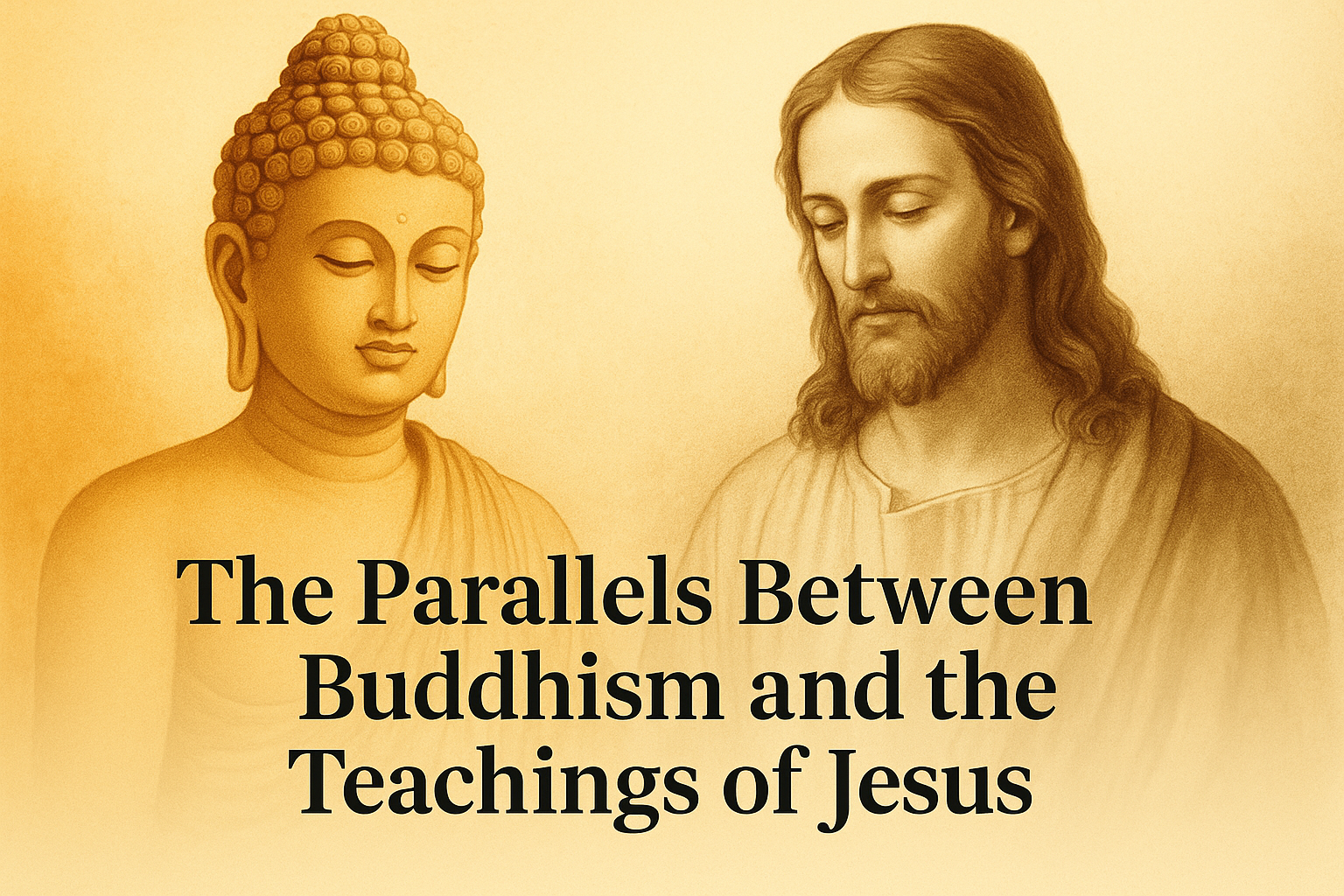
Despite what some angry and tribalistic Christians might believe, religion is not a global competition for spiritual dominance. It is not a war or rivalry to determine which faith can claim supremacy or boast the largest number of converts. True spirituality is not about colonizing the world with a particular creed, but about awakening from the illusions of ego, division, and superiority.
The reality is that many of the teachings attributed to Jesus closely mirror those found in Buddhism, Hinduism, and other ancient traditions. These overlaps are not coincidental — they exist because no single religion holds a monopoly on spiritual truth. The path to awakening is not owned; it is shared, echoed, and rediscovered across time and culture.
In fact, much of what Jesus taught — from compassion and non-judgment to inner transformation and detachment — was expressed in Buddhist philosophy centuries before his time. This does not diminish his teachings but reinforces their universality. And contrary to what your favorite tribalistic pastor may suggest, Buddhists are not your enemies — they are your allies in the pursuit of truth. Or as Jesus would have put it: they are your neighbors.
If you’re engaging in comparative religion only to find differences and assert superiority, you’re missing the point. A more enlightened and loving approach is to seek the profound similarities that unite us — the shared wisdom that transcends dogma. Below is a list of such similarities between Buddhism and the teachings of Jesus, and no faith has the right to claim them exclusively. These are universal truths — timeless, sacred, and belonging to all.
Much of the competitive nature within modern Christianity may stem from a particular verse in the Gospels where Jesus says, “No one comes to the Father except through me.” On the surface, this statement can appear exclusionary — as if Jesus is declaring his path to be the only valid one, in opposition to all others. But a closer, more thoughtful reading reveals something far more profound.
Jesus was not demanding worship of himself, nor was he invalidating the spiritual paths of others. Rather, he was pointing toward the way — the inner transformation, surrender, and awakening that his teachings embodied. He was calling us to follow his example, not to idolize him. Nowhere in the Gospels does Jesus command worship; instead, he consistently redirects attention to the Father — to the infinite, divine source that dwells within us all.
We know this deeper meaning is true because countless individuals from various faiths — including Buddhists, Hindus, and others — have experienced genuine spiritual awakening without ever identifying as followers of Jesus. They reached the same sacred source through different means, revealing that Jesus’ words were never meant to be used as a boundary, but as a bridge.
Jesus was a poet, a master of metaphor and symbol. When he said he came not to bring peace but a sword, he was not advocating violence — he was referring to the inner disruption that truth brings when it cuts through illusion and ego. Unfortunately, when such symbolic language is taken literally, the meaning is lost. We end up with distorted doctrines and believers who mistakenly imagine Jesus as a militant figure rather than the radical teacher of peace, love, and surrender that he truly was.
This recognition should come as liberating news for many Christians: those of other faiths are not your enemies, but your neighbors — a truth Jesus explicitly taught. The real enemy is the ego’s desire to divide us into tribes and factions, convincing us to see each other as separate.
When we truly understand the spiritual essence behind Jesus’ teachings — and those of other great traditions — we arrive at the same place: a peaceful, unified state of being in which we see all others as brothers and sisters. Because in truth, we are not separate. We are one.
There are profound philosophical and spiritual parallels between Buddhism and the core teachings of Jesus, especially when his message is interpreted through a non-dogmatic, mystical, or inner-transformation lens. While they come from vastly different cultural and historical contexts, both traditions emphasize inner change, compassion, and liberation from suffering.
Here are some of examples of the most undeniable identical similarities:
1. Inner Transformation Over External Ritual
- Jesus: Taught the importance of inward purity and transformation of the heart (“The Kingdom of God is within you” – Luke 17:21).
- Buddha: Emphasized self-realization through mindfulness and meditation, not external rituals or sacrifices.
2. Compassion and Non-Judgment
- Jesus: Preached love for one’s enemies, radical forgiveness, and compassion for the marginalized.
- Buddha: Taught karuṇā (compassion) and mettā (loving-kindness) toward all beings, without exception.
3. Ego Death and Selflessness
- Jesus: “If anyone would come after me, let him deny himself…” (Matthew 16:24). He modeled ego surrender to God’s will.
- Buddha: The concept of anattā (no-self) teaches the impermanence of the ego and encourages release from clinging to identity.
4. Detachment from Worldly Desires
- Jesus: Warned against materialism (“You cannot serve both God and money” – Matthew 6:24).
- Buddha: Taught that desire is the root of suffering (dukkha), and advocated for detachment through the Middle Way.
5. Nonviolence and Peace
- Jesus: “Blessed are the peacemakers…” and his rejection of violence, even when facing death.
- Buddha: Advocated ahimsa (non-harming) as a core virtue in thought, word, and action.
6. Forgiveness and Liberation
- Jesus: Focused on forgiveness as a path to spiritual freedom (“Forgive them, for they know not what they do” – Luke 23:34).
- Buddha: Taught that forgiveness frees the mind from anger and hatred, paving the way for enlightenment.
7. Parables and Teaching Style
- Both Jesus and the Buddha frequently taught through parables and metaphors, guiding people to insight through story rather than doctrine.
8. Emphasis on Present-Moment Awareness
- Jesus: “Do not worry about tomorrow… Each day has enough trouble of its own.” (Matthew 6:34)
- Buddha: Centralized mindfulness and awareness of the present moment as key to awakening.
9. Universal Brotherhood
- Jesus: Broke social and religious boundaries by dining with sinners, speaking with Samaritans, and including all in God’s love.
- Buddha: Taught that caste, status, and labels are illusions, and that enlightenment is accessible to all.
10. Path to Enlightenment / Salvation Through Direct Experience
- Both traditions ultimately point to direct, personal transformation over rigid adherence to dogma.
- Jesus called for a “rebirth” of spirit.
- The Buddha spoke of awakening through direct insight.




Leave a Reply