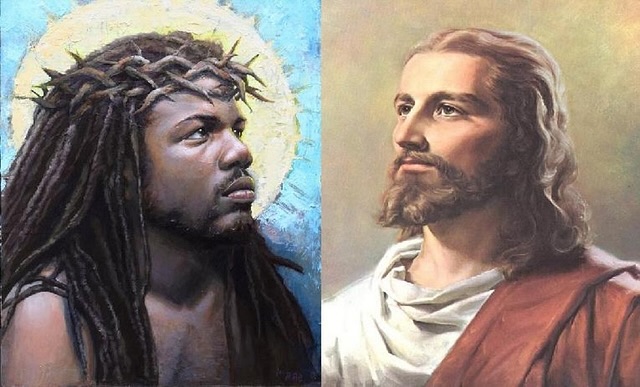
It’s remarkable how some people react with outrage at the idea of a Black person portraying Jesus in a retelling of his story—simply because it deviates from the familiar, Western image of a blonde-haired, blue-eyed Christ. This indignation conveniently overlooks a long history of diverse cultural interpretations: African art has portrayed Jesus as Black, Asian art as Asian, and countless others have reimagined him in their own likeness. Artistic representation has always been fluid, shaped by the people and context in which it emerges.
What matters far more than Jesus’ outward appearance is the message he delivered—a message of love, humility, and unity that transcends race or ethnicity. To fixate on his physical traits reveals an unhealthy attachment to identity—something Jesus explicitly warned against. In truth, every cultural depiction of Jesus should be seen as a testament to the universality of his teachings. It should inspire joy among Christians that people across the world find his message so powerful, they reflect it through their own image to make it even more personally meaningful.
It’s also worth noting that no mainstream Western depiction of Jesus has ever accurately reflected what a man from that region and era would have truly looked like. There were no blonde-haired, blue-eyed white men walking the streets of first-century Judea.
If Christians are going to express outrage over creative reinterpretations of his story, where was that same energy when The Matrix reimagined him as an action hero, or when Jesus Christ Superstar turned his life into a rock opera? The faith that teaches humility, compassion, and forgiveness should not be so easily shaken by diverse artistic portrayals.
Rather than obsessing over superficial details like appearance, perhaps the real concern should be the countless ways his teachings are betrayed by those who claim to follow him—preaching love while practicing division, and invoking his name while ignoring his message.
Frankly, we are free to tell the life story of Jesus using robots as the cast, and if that or diverse portrayals of race and identity deeply unsettles someone, it reveals exactly where they’ve placed the emphasis in his story. This is one of the most revealing litmus tests of a Christian’s spiritual maturity: how much they are triggered by something as superficial as casting.
I once heard someone argue that such “inaccurate” depictions might provoke physical violence from devout Christians as if we needed further proof that many never truly absorbed what Jesus actually taught. If a reimagining of his image invites violence, then clearly the message of peace, love, and non-retaliation has been completely missed.
What’s especially revealing is that these diverse casting choices are not made with malice or intent to slander, they’re simply creative expressions aimed at making Jesus’ story relatable to more people. Yet the response from some Christians has been anything but Christ-like, lashing out with mockery and even racism toward people of other faiths. It’s as if Jesus’ command to “turn the other cheek” was never spoken.
There is no valid comparison between thoughtful reinterpretation and intentionally hateful content. Retaliating against people who never intended harm in the first place is not righteous, it’s just cruel. It’s a sad reflection of how far removed some have become from the core of Jesus’ message: that love, humility, and compassion should define us, not outrage over artistic expression.
What brand of Christianity did these Christians grow up that permits such judgement and angry insistence on depicting him on one specific race even if it’s not necessarily historically accurate? The emphasis on race puts too much value and superficial differences that frankly don’t matter when you consider the fact that we are all one in truth.
Many Blessings Your Way! Join my mailing list if you want occasional updates.
I do not spam email boxes and will not try to sell you anything!




Leave a Reply