
What Christianity Got Wrong About Jesus
There is a principle embedded in the teachings of Jesus that modern Christianity has never fully reckoned with: the willingness to abandon any doctrine — whether it predates him or was added after him — that cannot stand alongside what he actually taught. That includes teachings many Christians have held as sacred their entire lives. When a belief directly contradicts Jesus’ message, clinging to it isn’t faith. It’s avoidance.
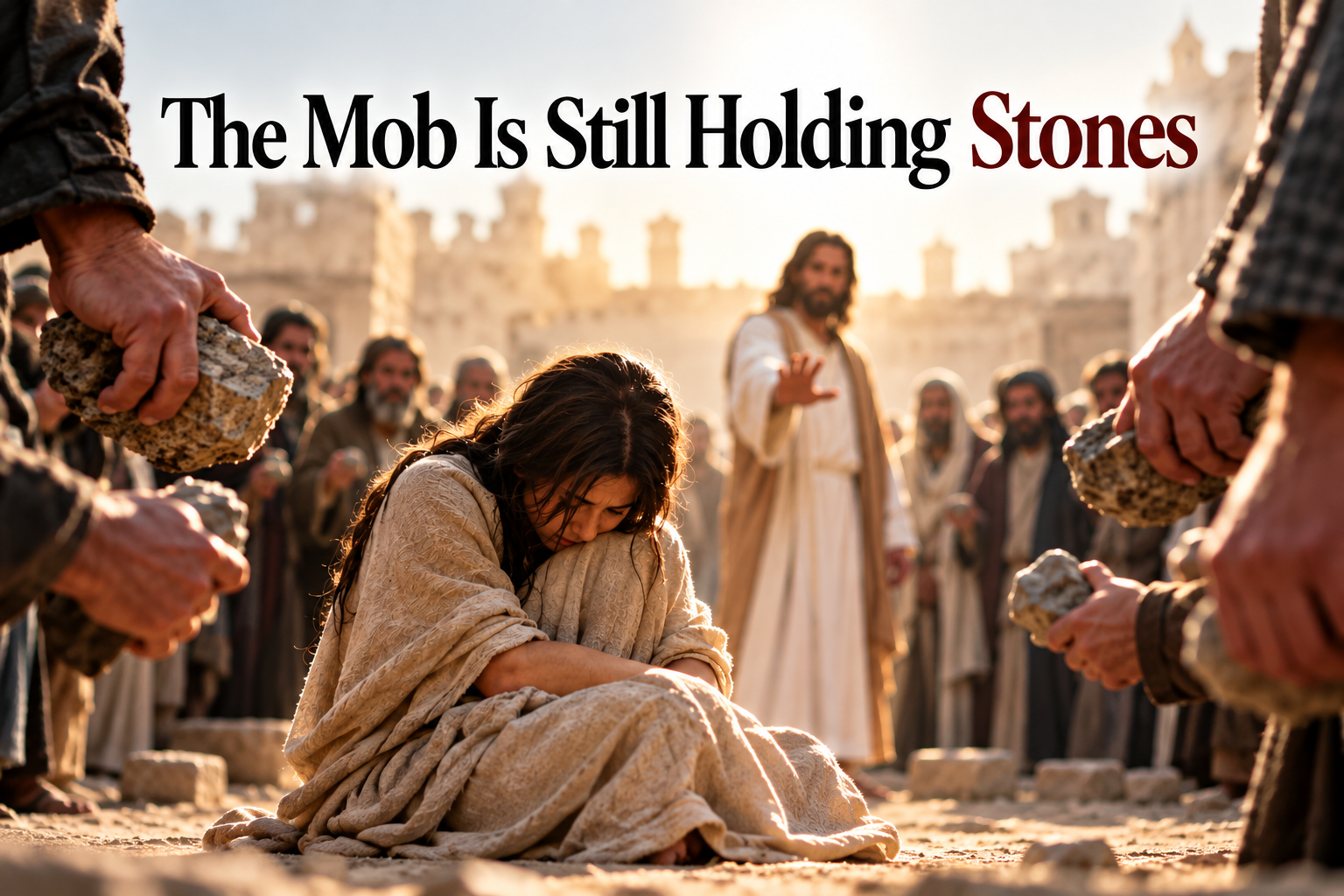
Consider one of the clearest examples from his own ministry. Jesus demonstrated that you can oppose destructive behavior without despising the person behind it. He modeled this directly when he refused to condemn the woman caught in adultery, instead asking those without sin to cast the first stone. He rejected the act without turning her into an enemy. Centuries later, the instinct he tried to correct has not only survived — it has flourished. The treatment of the LGBT community by many Christians today is a striking case in point. The contempt directed at these individuals isn’t a critique of behavior. It’s hatred of people. One has to ask, genuinely: at what point does the Christianity kick in?
The drift from Jesus’ actual teachings began almost as soon as the Gospels were written. As the New Testament moves beyond them, the emphasis quietly shifts from practicing what Jesus taught to simply claiming faith in him. That is a direct contradiction of everything he stood for. Jesus never taught passive belief as a spiritual path. He taught transformation through lived action — through integrity, compassion, and deliberate inner work. Yet over time, professing faith in the right figure replaced the harder and more essential work of embodying what that figure taught.
The distortions didn’t stop there. Later scripture increasingly reframed the entire story of Jesus around divine wrath requiring a blood sacrifice — the notion that Jesus was punished in your place, that he “paid the price.” The more carefully you trace Christianity’s theological evolution, the more a single pattern emerges: each new layer of doctrine asks believers to do progressively less of what Jesus actually instructed. The sacrifice narrative delivered this most efficiently. If Jesus already settled the debt, the unspoken implication becomes that nothing is really required of you. The irony is that these contradictory teachings sit comfortably in the same New Testament that contains the Gospels themselves.
Hell, too, was repurposed in ways Jesus never intended. He never taught that terror of eternal punishment should be anyone’s motivation for spiritual life. Fear as a mechanism of obedience is, in fact, the opposite of what he repeatedly emphasized — he instructed his followers to release fear, not to be governed by it. The image of a literal lake of fire was symbolic language meant to steer people away from suffering and toward the ecstasy of spiritual awakening. It was never a threat designed to produce compliance. Yet for millions of people today, their entire relationship with Jesus rests not on love or genuine transformation, but on terror of what happens if they don’t believe correctly.
Then there is what may be the most consequential distortion of all: the widespread insistence that what Jesus called the “Kingdom of God” is a post-death reward rather than a present reality. Jesus was unambiguous. He described this kingdom as at hand — available now. He said it exists within you. Those words mean exactly what they say. The Kingdom of God is, in the most expansive and literal sense, the universe itself — and our oneness with it is not something we have to earn after death. It is already present within each of us, waiting to be accessed.
When this is raised with traditional Christians, the response is rarely excitement. It is almost always resistance, despite the fact that Jesus’ own words leave very little room for interpretation. The idea that this state of union and spiritual bliss is available right now — that death is not required to experience it — ought to be cause for elation. That it instead provokes defensiveness reveals how thoroughly the original teaching has been buried.
Conformity to institutional rules gradually displaced what Jesus consistently centered: love, compassion, justice, and inner integrity. This is especially striking given that Jesus spent his life challenging religious bureaucracies and power structures. He was in constant tension with religious authorities. And yet, in the wake of his death, religious power structures rose up everywhere, each one leveraging his name as a source of authority.
The result is what we see on nearly every church broadcast today — sermon after sermon devoted to “accepting Jesus Christ as your Lord and Savior,” with little to no time spent teaching people how to actually embody what he taught. Churches built around celebrating Jesus as a figure rather than practicing his instructions are, at their core, operating in opposition to his purpose. His entire focus was on inner spiritual transformation, not external religious systems. He was pointing people toward awakening, not toward institutions.
Those institutions eventually positioned themselves as gatekeepers — deciding who qualified for heaven, issuing the terms of salvation, demanding submission to their authority under threat of eternal punishment. This despite Jesus teaching that no institution is necessary at all, only a direct internal connection with the higher Source he called “our Father.” Once heaven became a destination requiring institutional approval, the denominations multiplied, the divisions deepened, and the drift from Jesus’ original message accelerated. If someone were to appear today and genuinely attempt to restore that original message in a way that threatened the vast, well-funded apparatus of modern Christianity, the reception would almost certainly not be warm. We have already seen evidence of this with James Talerico, with some Christian ministers openly calling for his death. That alone reveals how far things have gone.
Tribalism is another corruption that runs directly counter to what Jesus taught. The insistence that anyone outside a specific denomination — or outside Christianity entirely — is spiritually lost, demonic, or destined for hell reflects exactly the kind of in-group mentality Jesus was actively dismantling. He instructed his followers to treat others as brothers and sisters, as neighbors. He never drew the lines that modern tribalism draws so confidently. What makes this particularly absurd is that Jesus taught many of the same fundamental truths found in Eastern religious traditions, yet practitioners of those traditions are routinely dismissed as misguided or dangerous by Christians who have never examined the overlap. The message underneath all of this is: we’re better than you — which is not a spiritual posture at all. It is ego, the very thing Jesus was trying to help people release.
And when tribalism replaces genuine moral guidance, the consequences are severe. Ethical behavior gets swapped out for mere membership in the group. Once that moral compass disappears, almost anything can be tolerated — and history is clear about where that leads. It is how self-declared Christians can advocate for cruelty and prejudice, whether under the banner of the KKK, Nazism, or contemporary political movements, without apparent awareness of the contradiction.
Paul’s influence introduced another distortion that proved remarkably durable: the framing of all humanity as inherently guilty, depraved, and condemned. That theology didn’t just survive — it became the defining texture of the religion. Christianity is, to this day, widely experienced as a faith built on guilt. Yet Jesus never taught this way. He never told people they were disgusting in the eyes of God. His message was restoration: return to your oneness with all things, forgive, be healed, release your grip on separation and control. Guilt was not a tool he used. It became one later, in his name.
And perhaps the deepest contradiction of all is the one hiding in plain sight — the transformation of Jesus from a teacher to be followed into a deity to be worshipped. He never asked for this. He never instructed anyone to declare him Lord and Savior, to treat him as God incarnate, or to elevate him above the path he was trying to show. Ask any Christian to produce a verse where Jesus commands his own worship, and they will not find one. When he told people to follow him or believe in him, he meant to emulate him — to live as he lived, embody what he embodied, pursue the same awakening he was pursuing.
Yes, people in his time had intense, almost feverish reactions to him. When someone is healing others, raising consciousness, and helping people reconnect to something universal already present within them, devotion follows naturally. The crowd’s impulse to label divinity onto the messenger is understandable. But the reaction of the crowd is not the same as the instruction of the teacher. Jesus repeatedly referred to himself as the “Son of Man” — a human being. He maintained his relationship with God as a child of God, not as God Himself, just as the rest of us are meant to. He walked a path guided by the Father and the Holy Spirit, and in that respect he was not categorically different from other pivotal spiritual teachers throughout history who carried the same essential truths, having surrendered their egos to the same higher Source.
The invitation he extended to every person he encountered was not to worship him. It was to walk the same path. To yield to the greater life available beyond the ego’s insistence that it knows best. To stop performing religion and start living transformation.
That distinction — between spirituality and religion — is the very thing Jesus was trying to teach. Two thousand years later, it remains the most important one Christianity has yet to fully hear.
| Topic | Jesus taught | Later Christianity often taught (post-Jesus emphasis) |
|---|---|---|
| What “saves” you | Doing God’s will + inner transformation | Believing correct doctrine / “faith alone” |
| Proof of spirituality | Fruits matter (what you actually become) | Religious identity + declarations (“I’m saved,” “I’m Christian”) |
| The Kingdom of God | Present and accessible now | Mainly after death (“heaven later”) |
| God’s nature | A merciful Father who forgives | A judge whose wrath needs to be “satisfied” |
| Forgiveness | Mandatory, non-negotiable | Often treated as optional, secondary, or symbolic |
| How you treat others | Love your neighbor, love enemies | “Love your group, condemn outsiders” (tribal faith) |
| Who’s “in” | Outsiders can be closer to God than religious insiders | “Our religion = the only acceptable path” |
| Sin | A spiritual sickness / blindness to heal from | A legal guilt status you’re born condemned under |
| Repentance | Change your mind / awaken / turn back | “Admit you’re bad, accept the payment, you’re covered” |
| Judgment | Based on how you lived (mercy, compassion, actions) | Based on belief status (saved vs unsaved) |
| Wealth & status | Detachment from money + humility | Prosperity-style religion or “wealth = blessing” culture |
| Religious leaders | Jesus confronts religious elites and hypocrisy | Church authority often becomes unquestionable |
| Rules vs spirit | Rules never override love, mercy, and truth | Legalism and rule-policing become “holiness” |
| Violence & enemies | Enemy-love and non-retaliation | Nationalism, war-blessing, culture-war Christianity |
| Who is greatest | The greatest is the servant | The greatest is often the loudest, richest, most “powerful” |
| Worship vs imitation | Follow his teachings | Worship Jesus while ignoring his actual instructions |
| Fear | “Do not fear” (fear blocks the Kingdom) | Fear used as a tool: hell, doom, shame, control |
| Heaven / hell emphasis | Kingdom + transformation is central | Hell avoidance becomes the sales pitch |
| Purity | Focus on heart purity (intent, love) | Obsession with external purity (image, behavior-policing) |
| Law | The “law” is fulfilled in love | The “law” becomes weaponized for control |
| “Knowing God” | Direct relationship with God within | External gatekeeping through institutions |
According to teachings injected into the New Testament after Jesus died, God apparently became very specific when it comes to fashion styles.

The Pre-Jesus Contamination of Christianity
The Old Testament Problem Christianity Refuses to Solve
Once you’re willing to accept that much of the New Testament strays from what Jesus actually taught, intellectual honesty demands you turn the same eye toward the Old Testament. There are commandments and passages there that are flatly incompatible with everything Jesus stood for — and pretending otherwise doesn’t protect the faith. It undermines it. Worse, those unexamined contradictions become convenient loopholes, giving cover to people who want to behave terribly while still calling themselves Christians.
The pattern is familiar: someone harbors a bias against a particular group, then reaches for an Old Testament verse to sanctify it. At this point, the litmus test should be straightforward. If an Old Testament commandment cannot be reconciled with the teachings of Jesus, it has no business being upheld as morally binding for Christians today. It should be discarded — without apology, without hand-wringing.
The most visible example of this failure is the ongoing use of Old Testament scripture to justify hostility toward gay people. That hostility directly betrays what Jesus taught. Even granting the most conservative interpretation — that homosexuality is sinful — Jesus’ response to sin was never contempt for the person. He taught exactly the opposite. And when you layer onto that the overwhelming scientific evidence that many gay people are born that way and cannot simply choose otherwise, hatred directed at them becomes not just un-Christian but plainly indefensible. The appropriate response, if you’re genuinely following Jesus, is simple: extend your love, mind your business, and move on.
The LGBTQ community has, somewhat unintentionally, become one of the clearest daily tests of whether a Christian is actually living out Jesus’ teachings or merely performing them. For that, if nothing else, they deserve acknowledgment.
There is also a deep dishonesty embedded in the selective use of Old Testament scripture. Christians who invoke it to condemn gay people are already cherry-picking — they’re just unwilling to admit it. Ask most Christians whether they believe gay people should be stoned to death, as the Old Testament explicitly commands, and they’ll recoil. Which means they already know the text requires filtering. They are already discarding the passages they find unconscionable. The question they never adequately answer is: who gets to decide which verses stay and which ones go — and by what standard?
That standard, if Christianity is to be coherent at all, has to be Jesus. If a passage doesn’t align with what he taught, it doesn’t survive the cut. That rule has to apply consistently. You cannot invoke the Old Testament to justify hating gay people in 2025 while quietly setting aside its instructions to execute rebellious sons or enslave neighboring tribes. The selective enforcement doesn’t reflect principled faith — it reflects personal prejudice dressed in religious language.
The uncomfortable truth is that the Bible is not a perfect book. The Old Testament in particular was written by flawed human beings who embedded their own biases, cultural anxieties, and capacity for cruelty into its pages. That doesn’t mean the text holds no value. It means it requires discernment — and the clearest guide for that discernment is the teachings of Jesus himself, which set a higher, more ethically coherent standard than much of what precedes them.
His teachings don’t merely supplement the Old Testament. In many places, they effectively override it. If modern Christians have already, quietly and collectively, decided that certain Old Testament instructions are too extreme to defend, then the framework for evaluation already exists. They’re just not applying it consistently.
It’s time to start.
| Old Testament teaching (verse) | What Jesus taught (verse) | Why it conflicts |
|---|---|---|
| “An eye for an eye…” (Exodus 21:23–25) | “Do not resist an evil person… turn the other cheek.” (Matthew 5:38–39) | OT permits proportional retaliation; Jesus teaches non-retaliation. |
| Kill witches/sorcerers (Exodus 22:18) | Mercy over condemnation (Matthew 5:7) | OT commands execution; Jesus teaches mercy as a spiritual ideal. |
| Death penalty for adultery (Leviticus 20:10) | “Let him who is without sin cast the first stone.” (John 8:7) | OT mandates killing; Jesus halts stoning and exposes hypocrisy. |
| Death penalty for gay sex (Leviticus 20:13) | “Judge not…” (Matthew 7:1) + Love your neighbor (Matthew 22:39) | OT commands death; Jesus centers love and warns against condemnation. |
| Death penalty for blasphemy (Leviticus 24:16) | Love enemies / pray for persecutors (Matthew 5:44) | OT kills religious offenders; Jesus teaches non-violence and love even under offense. |
| Death penalty for Sabbath work (Exodus 31:15) | “The Sabbath was made for man…” (Mark 2:27) | OT is rigid and lethal; Jesus reframes Sabbath as human-serving, not punishment-serving. |
| God commands genocide / total destruction (1 Samuel 15:3) | “Love your enemies.” (Matthew 5:44) | OT features holy war logic; Jesus forbids hatred and teaches enemy-love. |
| Kill non-virgin brides (Deuteronomy 22:20–21) | Mercy / forgiveness (Matthew 6:14–15) | OT is brutal sexual “purity” enforcement; Jesus emphasizes compassion and forgiveness. |
| Rape victim must marry her rapist (Deuteronomy 22:28–29) | Golden Rule (Matthew 7:12) | OT treats her like property; Jesus’ ethic demands dignity and humane treatment. |
| Slavery permitted as law (Exodus 21:2–6; Leviticus 25:44–46) | “The greatest among you will be your servant.” (Matthew 23:11) | OT regulates owning humans; Jesus teaches servanthood and equality of worth (anti-domination ethic). |
| Hate/destroy enemies (Psalm 137:8–9 as violent blessing; also war-prayer spirit) | “Bless those who curse you.” (Luke 6:28) | OT includes vengeance praise; Jesus teaches blessing and peace. |
| “Happy is he who dashes your babies against the rocks.” (Psalm 137:9) | “Blessed are the peacemakers.” (Matthew 5:9) | OT contains extreme violence; Jesus teaches peace and love. |
| Harsh purity exclusion / “unclean” separation (Leviticus 13–15) | Jesus touches lepers / heals the excluded (Mark 1:40–42) | OT ostracizes; Jesus reintegrates and heals. |
| “I hate divorce” + rigidity / punishment culture (Malachi 2:16; legalism across Torah) | Mercy over sacrifice (Matthew 9:13) | OT often leans legalistic; Jesus routinely prioritizes mercy over strict enforcement. |
| Kill children for rebellion (Deuteronomy 21:18–21) | “Let the little children come to me…” (Matthew 19:14) | OT allows lethal punishment of children; Jesus elevates children as models of the kingdom. |
Below you’ll find some other examples of OT scripture that sets moral guidelines and commandments that prove unequivocally that the OT is not perfect and should not be cited as a reference to what is right and wrong. The teachings of Jesus are perfectly adequate in this respect and frankly his teachings negate a large portion of the OT. Particularly the teachings that often get cited to justify hatred towards marginalized groups in contemporary society. If the teachings to execute your son for being rebellious should not be carried over into what someone believes is modern and acceptable Christianity, then why not the judgements and and punishments towards a gay person as well? Who gets to decide what continues to be upheld and what gets left behind in ancient times?
If you work on the Sabbath… you should be executed
- Exodus 31:15
- Numbers 15:32–36 (example story: man is put to death for gathering sticks)
This includes house chores, not just working a 9 to 5. If you need to pull in extra hours of work to make end’s meet, you’re screwed.
A “rebellious son” can be executed by the community
- Deuteronomy 21:18–21
This would wipe out the entire population by today’s standards.
Rape victim must marry her rapist (and he pays her dad)
- Deuteronomy 22:28–29
“Justice”
If a woman isn’t found to be a virgin, she can be executed
- Deuteronomy 22:13–21
Again, this wipes out the bulk of our populations.
Adultery requires execution
- Leviticus 20:10
- Deuteronomy 22:22
The perfect example of how Jesus teachings essentially nullify the old testament as a book that should be referenced as any sort of moral compass in life, when he goes out of his way to save an adulteress.
Same-sex intercourse gets the death penalty (Leviticus 20:13)
This showcases why we should not be honoring laws and commandments established in an era where we did not have the understanding that we do now, and are now fully aware that sexual attraction is determined far before adulthood. I think it’s fair to say we have all met a gay person whom we knew was going to be gay in their younger years. Their coming out of the closet shocked no one. You can’t change or convince them to change what they find attractive.
“Witches” must be killed Exodus 22:18
What’s amazing about this verse is that it exists in the same book where people are commanded straight from God not to kill others. Another perfect example of why the OT is not a reliable text to use a moral compass.
Blasphemy should result in execution
- Leviticus 24:16
Anyone who has ever said “OMFG” or “JFC” should be killed and anyone who truly believes Old Testament is a perfect book with a gold standard of morals and ethical guidelines would need to endorse the murder of such persons. It’s not. God does not have the thin skin Judeo-Christian’s think he does.
If you curse your parents, they should be killed.
- Leviticus 20:9
- Exodus 21:17
Another example of contradictory orders from the same book, in this case murder problematic children. What is the point of instructing Christians to repent from their ego’s worst weaknesses if you’re to be immediately and permanently punished? Repentance is no longer an option according to much of the Old Testament if you’re killed right away.
If someone touches a dead body, they’re “unclean” and need ritual cleansing
- Numbers 19:11–13
There goes the entire field of medical examiners and forensic pathology.
Menstruation makes a woman “unclean” Leviticus 15:19–24
Ejaculation makes a man “unclean” Leviticus 15:16–18
You can own foreign slaves permanently (Leviticus 25:44–46)
Yet another example of biblical scripture permitting slavery. This scripture permitting it is a large reason why Slavery was openly fought for and excused during the civil rights era by advocates of slavery. To this day, we have influential pastors who cite Old Testament scripture as a reason slavery was and is not a bad thing. So these old unethical ideas didn’t die over time.
You can beat your slave as long as they don’t die “immediately” Exodus 21:20–21
No explanation needed.
You can sell your daughter into slavery (Exodus 21:7–11)
Kill entire enemy populations in conquest (“leave alive nothing that breathes”)
- Deuteronomy 20:16–17
Once again, God commands people to kill others despite spiritual commandments not to kill. This of course sets the groundwork and justification for genocide.
Don’t eat shrimp or shellfish (Leviticus 11:10–12)
Red Lobster is a den of sinners
Don’t eat pork (Leviticus 11:7–8)
This makes a substantial portion of our population sinners
Don’t wear mixed fabrics
- Leviticus 19:19
- Deuteronomy 22:11
Do not plant two kinds of seeds in the same field (Leviticus 19:19)
If your ox gores someone, kill the ox and the owner too Exodus 21:28–29
If two men are fighting and a woman grabs one by the genitals… cut off her hand (Deuteronomy 25:11)
Don’t boil a young goat in its mother’s milk
- Exodus 23:19
- Exodus 34:26
- Deuteronomy 14:21
A “trial” where a suspected adulteress drinks “bitter water” Numbers 5:11–31
Don’t round the edges of your beard / specific grooming restrictions Leviticus 19:27
Tattoos are forbidden
This instruction is especially peculiar since it demonstrates an attachment to one’s body, an attachment we should let go of completely.
Feel free to subscribe to my new Substack! You’ll also find my latest writings published there if you prefer it over WordPress, along with refreshed and updated versions of some of my earlier work, thoughtfully adapted for the new platform. I’d love to have you join me there!
Alternatively, you can subscribe to my traditional email mailing list below! No marketing or selling of emails will occur, it’s just for updates.



Leave a Reply