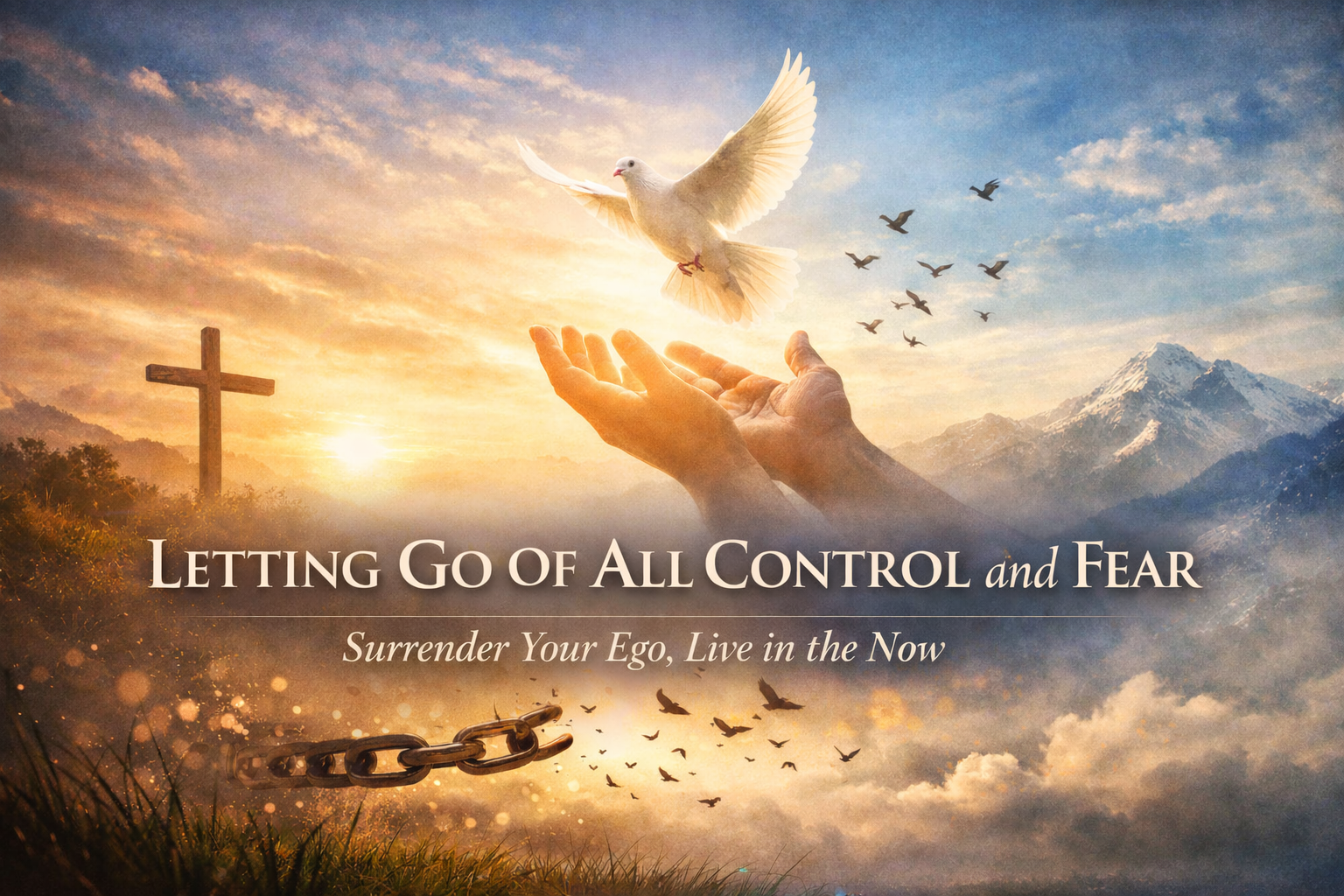
Jesus and Buddha taught the same thing about fear. Modern Christian churches just don’t mention it.
Fear is not a spiritual condition. It’s an ego condition — a product of the false self that lives below your higher, truer nature. And yet instructions for overcoming it are almost entirely absent from modern Christian churches, despite the fact that releasing fear is one of the primary teachings of Jesus. If your church never addresses this, that’s worth paying attention to. Find one that does — one that offers actual step-by-step guidance on how to achieve it, not just reassurance that everything will be fine.
The first step is simple, even if what follows isn’t: declare your surrender. State explicitly, in your own words and with genuine sincerity, that you are releasing control and asking the Holy Spirit to align your will with the greater will of your source. Make the intent clear. That declaration alone begins to loosen the ego’s grip.
Why the Ego Clings to Control
Fear and control are the same mechanism. The ego clings to control because it is terrified of the unknown — terrified, ultimately, of its own dissolution. It grips outcomes, rehearses futures, defends its identity, and calls all of that vigilance. It isn’t. It’s fear with a productivity mask on.
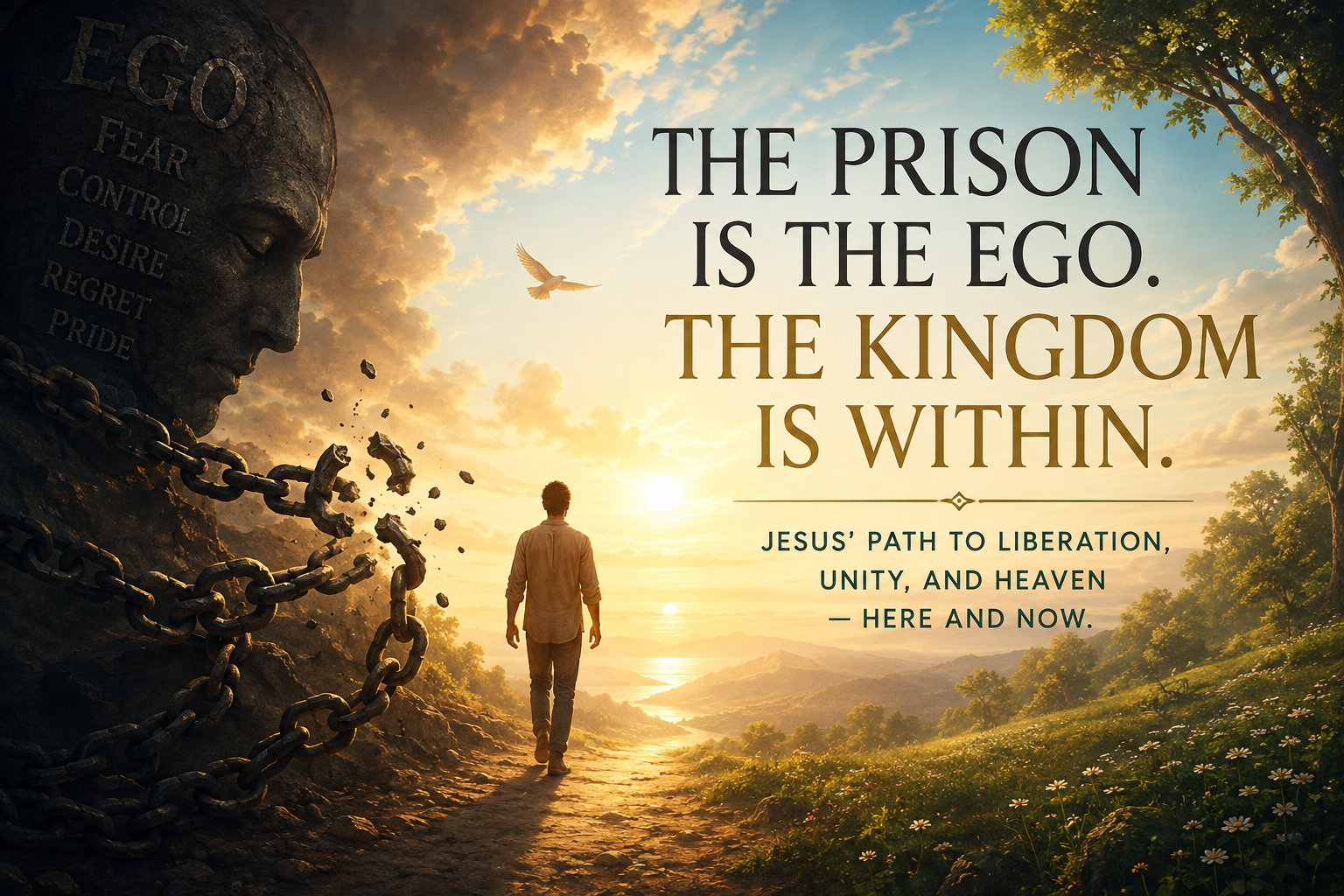
Since fear is a function of the lower ego self, the solution isn’t to fight it directly. Fighting it only gives it more energy. Instead, the approach is dis-identification — stopping the practice of treating your ego as you. Jesus described this with characteristic metaphorical precision: “Whoever will lose his life will find it” and “deny yourself.” Taken literally, these instructions sound like self-destruction. Taken as the metaphor they are, they’re a precise description of ego dissolution — the process of recognizing that the false self constructed by your ego is not who you actually are, and never was.
Begin watching it. Notice what you project onto others. Notice what triggers a disproportionate reaction, what makes you defensive, what you need to be right about. That’s your ego showing you its architecture. Ask the Holy Spirit to help you dissolve it, and declare that dissolution as your highest priority. You will receive the help you need — but only if the intention is sincere.
Releasing Outcomes Without Becoming Apathetic
One important distinction: letting go of control is not the same as apathy. Apathy means you don’t care what happens. Releasing attachment to outcome means you act, prepare, and set intentions — and then stop white-knuckling the result.
Make plans. Show up fully. Work hard. Then stop replaying every possible scenario in your mind, running the emotional gauntlet of outcomes that haven’t happened and may never happen. Do the work, then shift your attention to what’s in front of you right now. The future will worry about itself — which is not a casual suggestion. It’s a direct instruction Jesus gave.
Practical tests of where your ego is still gripping: Do you need approval before speaking honestly? Do you crumble when you fall short of a goal? Does not winning an award, or losing an argument, or your partner making an independent decision feel like a threat? These are the ego’s security mechanisms revealing themselves. Each one is an invitation to practice release. When you let go of the controlling behavior, you simultaneously release the fear that generated it.
The Present Moment Is the Teaching
Living in the present moment is among the most consistently dismissed teachings in mainstream Christian contexts — typically waved off as New Age thinking or Eastern religion. This dismissal reflects a striking ignorance of what Jesus actually said. He explicitly instructed his followers not to worry about tomorrow. He taught that the Kingdom of God — total oneness with the universe, the interior state of awakening he spent his ministry pointing toward — is available now, not after death, not contingent on declaring him your savior, but accessible in this moment through genuine presence and surrender.
This is also one of the clearest convergences between Jesus and Buddhism: both traditions place the present moment at the center of spiritual practice. When you successfully inhabit the present, fear dissipates — because fear is almost always located in the past or the future, never in the actual now.
If your minister dismisses present-moment awareness as incompatible with Christian faith, that’s a meaningful signal about what that ministry is actually teaching.
Let Go of Separation
Fear is also sustained by the illusion of separateness — the ego’s insistence that the person in front of you is fundamentally other. Compassion, empathy, and genuine love for others aren’t just moral virtues. They’re the practical dismantling of that illusion, and they’re essential to accessing oneness with the universe.
It is simply not possible to experience interior unity with the cosmos while simultaneously holding up signs of racial superiority or clutching tribal identities. The contradiction is complete — made more glaring when it happens while wearing a cross, a symbol of a teacher whose entire message was to serve others, especially the least among us. As Jesus said, you will know them by their fruits. Actions declare allegiance more clearly than any label.
This teaching has to reach the next generation. Children need to be told, consistently and plainly, that we are all one — not as sentiment, but as fact.
Meditation Is Not a Foreign Practice
Sit quietly. Let thoughts arrive without engaging them. When fear appears, don’t try to analyze or fix it. Ask instead: who is afraid? Don’t answer intellectually. Just sit with the question and let the silence do the work.
Meditation succeeds because it trains you to silence the mind’s relentless stream of thought — not by suppressing thoughts, but by no longer being controlled by them. The better you become at this, the more naturally you will inhabit the peace and present-moment awareness that Jesus described as the Kingdom of God within.
Jesus himself pointed toward this practice. “Pray without many words,” he said. “Go into your inner room and shut the door” — a reference drawn from Jewish tradition that explicitly contrasted genuine inward prayer with performative public worship. He was describing interiority, silence, and direct communion with the source. That is meditation.
For Christians who still view meditation as exclusively Eastern: it isn’t, and the evidence of its effectiveness is beyond serious dispute. It is simply a method for executing Jesus’ own instructions more precisely — and one that Buddhism has preserved and refined with particular clarity. The alignment between the two traditions here is not coincidental. It’s confirmation that they’re drawing from the same source.
The path to peace is inward. The present moment is where it lives. And the instruction to find it there is older than any denomination that has since forgotten to teach it.


Leave a Reply