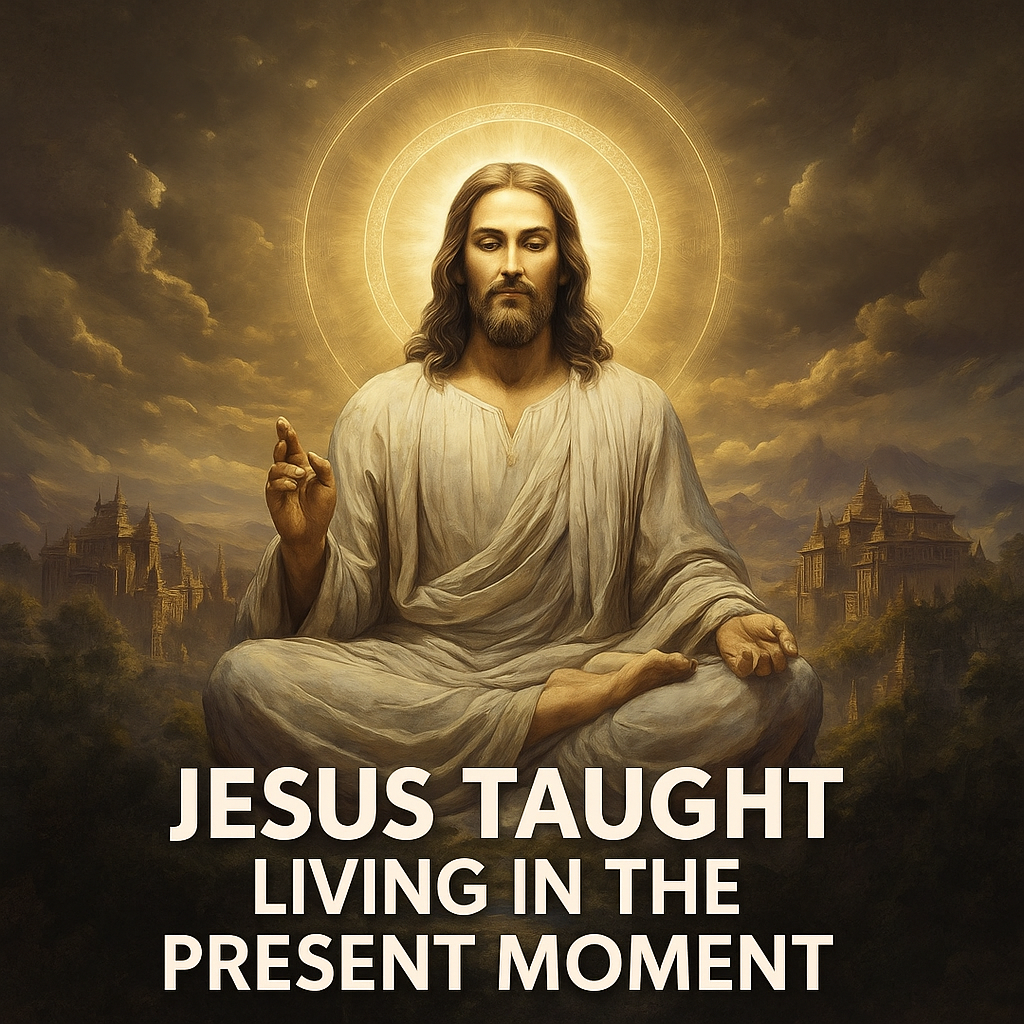
It’s unfortunate that modern Christianity often distances itself from one of the core things Jesus actually taught: living in the present moment. Many Christians treat “presence” as if it’s some foreign idea tied to Eastern traditions like Buddhism. But Jesus constantly taught practices that mirrored those same ancient teachings. Spiritual truth isn’t owned by any religion, and rejecting something simply because another faith also teaches it doesn’t make it untrue, it just shows a misunderstanding of what Jesus was really pointing to.
This kind of resistance usually comes from the ego: that urge to keep our “tribe” separate from everyone else. (“They have their beliefs, we have ours!”) But the truth is, these values are universal. The need to draw hard tribal lines is exactly the ego-driven mindset that both Jesus and Buddha told us to rise above.
Some Christians say, “Our faith is nothing like theirs. Salvation comes through the blood of Christ and accepting Him as savior.” But Jesus never taught salvation through worshiping him or treating him like a passport into heaven. He taught people how to experience what he called the “heaven within” not a post-mortem reward, but a living state of oneness with humanity and the universe now. He wasn’t promising some resort in the clouds after you die. He was helping people experience spiritual freedom while they were still alive.
And a major part of that experience is presence: letting go of the past, and trusting the future to God or the Holy Spirit. When you’re not controlled by what already happened or what might happen, you’re genuinely trusting the Spirit of the universe. That present moment, free from grasping and fear is where you step into something infinite. It’s where you loosen your grip and allow the greater will to unfold. (“Let Thy will be done.”)
Living in the present also frees you from old thought loops and emotional patterns that keep recreating the same problems in your life. By letting go of the past, you stop being dragged around by it.
So yes, Jesus absolutely taught presence, again and again. He told his followers to release the past and leave the future in God’s hands. It takes real humility to let go of control and the fear that comes with it, especially since the ego is addicted to controlling everything. But living in the present moment isn’t some exotic Eastern idea. It’s a universal spiritual truth that Jesus himself taught openly.
Ask the most devout Christians you know what they think about living in the present moment, you may be surprised how many dismiss it as eastern/satanic..
That being said, here are some other terrific teachings and clarifications that will blow the minds of your favorite Christian friends since they’re either not touched on routinely or not correctly explained. This will help them get over their knee jerk reactions to dismiss teachings they normally associate with eastern/mystical ideas.
1. “Take no thought for tomorrow.” — Presence Over Mental Projection
When Jesus said: “Take no thought for tomorrow.” (Matthew 6:34)
He wasn’t saying “don’t plan.”
He was saying: don’t mentally live in the future.
Worry, anxiety, fear, and projections all come from mentally leaving the present moment.
Jesus’ antidote was presence:
Focus on what is real right now
Trust the next moment when it arrives
Stay grounded in the now instead of the imagined future/worries/concerns
This will break your mind’s habit of projecting fear-based stories.
2. “Let the dead bury their own dead.” — Don’t Live Inside the Past
This line is often misunderstood.
Jesus was saying:
Don’t let your life be ruled by what’s already over.
Don’t let the past’s “ghosts” drive your choices.
He called people who live mentally stuck in the past “the dead.”
And he said: don’t join them.
Living in presence means:
- not replaying old wounds
- not carrying old identities
- not letting past pain shape current action
Presence dissolves old emotional loops.
3. “Be still and know…” — Stillness as a Portal
Jesus repeatedly went off alone into the desert, the mountain, the wilderness, or “a solitary place.”
This wasn’t isolation—it was intentional inner stillness.
He taught that stillness is where truth appears:
“Be still and know…”
(Psalmic language Jesus echoed often)
Stillness interrupts:
- racing thoughts
- ego narratives
- emotional reactivity
- fear patterns
- compulsive thinking
Stillness is the “reset button” for consciousness.
4. “The Kingdom is within you.” — Attention Inward, Not Outward
The “Kingdom of Heaven” was not a place as many Christians commonly perceive; Jesus stated clearly:
“The kingdom of God is within you.” (Luke 17:21)
He was teaching inward awareness.
The state modern people call presence, mindfulness, or being rooted in consciousness itself.
This means:
- Watch thoughts instead of becoming them
- Observe emotions rather than acting from them
- Look inward for clarity instead of reacting outwardly
Presence is the inner shift from:
“I am thinking” → “I am aware of thinking.”
That’s the same move all spiritual traditions point to.
5. “Do not judge.” — Stop the Ego’s Automatic Narratives
Judgment is the ego’s main pattern-loop:
- labeling
- comparing
- condemning
- projecting
- creating stories about others
Jesus taught “Do not judge.” (Matthew 7:1)
Judgment traps you in the ego’s narrative mind. It perpetuates that you are superior or inferior to others. Instead, remind yourself that we are all equally one and the same as our father’s children.
To stop the pattern:
- observe without labeling
- see without adding commentary
- step away from instant mental conclusions
6. “Forgive them…” — Release the Mental Movie
Forgiveness, in Jesus’ usage, is almost identical to dropping the mental story you’re replaying.
When you forgive, you:
- stop replaying injuries
- stop rehearsing old narratives
- stop letting the past dictate your identity
- stop fueling the ego’s sense of grievance
- Realize your own projections onto others. Ask for forgiveness of these and help transcend any toxic habits/weaknesses.
Forgiveness is not approval.
It’s mental freedom.
Presence = the end of mental grudges. Let the past go, acknowledge any personal projections you’ve placed on others as you forgive them whenever possible.
7. “Why do you worry?” (Pause Before Reacting)
Worry is the ego rehearsing worst-case scenarios. Jesus repeatedly said:
“Why do you worry?”
Which taught the practice of:
- pausing
- observing the fear
- returning to the present moment
This is exactly what modern presence teachings instruct:
- interrupt the automatic thought
- return to now.
When Jesus asked, “Why do you worry?” he’s not scolding.
He’s pointing out that worry is a state the ego creates, not the deeper Self. The ego lives in:
- imagined futures
- worst-case scenarios
- fears of loss
- trying to control what hasn’t happened yet.
Jesus is saying:
Your True Self, the spirit within the inner Kingdom does not worry. So you are identifying with the false self.
Worry Is the Mind Leaving the Present Moment, as we typically do when we worry about things in the future that have not happened yet. It is critical to never shift your focus away from the present moment.
Worry is your faith and attention placed in the wrong outcome, so when Jesus says this, he is asking “Why place your belief in fear instead of truth and the holy spirit?”
Worry Is the Mind Trying to Control What It Can’t. Your ego constantly desires control, let that worry go when you genuinely relinquish control
8. “Let your eye be single.” (Focus Awareness)
This phrase in Matthew 6:22 refers to unified attention.
A “single eye” means:
- undivided awareness
- full presence
- attention anchored in the present moment
- not pulled between past and future
- To no longer be divided between your ego and true higher self.
This is spiritual concentration, the opposite of mental chaos. A symptom of returning to the present moment.
9. “I am.” — Awareness of Being
Jesus’ core identity statement was never “I think,” but “I AM.”
“I AM” is the ultimate presence phrase.
It points to:
- awareness before thought
- consciousness itself
- the state of pure being
- the self untouched by fear, past, ego, or story
When you rest in “I am,” you’re resting in the present moment
If you enjoy or appreciate what I’m doing on this website, I would appreciate a subscribe! No selling of emails or marketing will occur, it’s just for updates. Check your promotions folder of your gmail sometimes, I will not be selling you anything.
Many blessings your way!



Leave a Reply