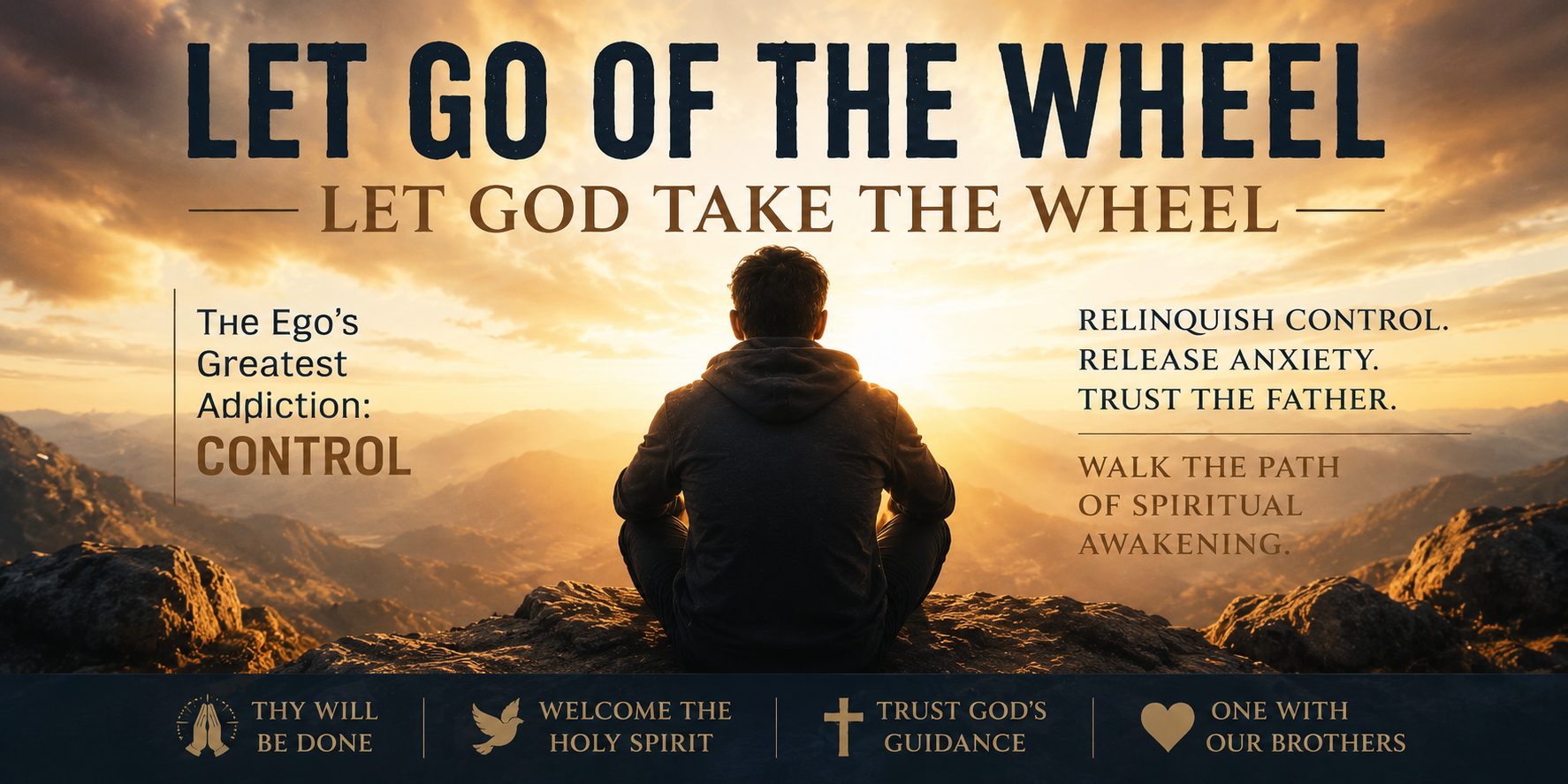
The teaching at the heart of Jesus’s message that most Christians casually skip over
Your ego wants one thing above all else: total control. Control of outcomes, control of the future, control of the narrative of your own life. And if you look honestly at the way most people move through their days — the anxiety, the planning, the need to determine every possible variable — you’ll see that this hunger for control is running the show far more than most of us care to admit.
Every authentic spiritual path, across traditions and centuries, points its followers toward the same essential surrender: loosen your grip. Stop white-knuckling the future. The path laid out by Jesus was no exception — and in fact, relinquishing control sits closer to the center of his teachings than most Christians have been led to believe.
The Crux They Glossed Over
The uncertainty of the future is one of the greatest sources of human suffering. We want to determine every possible aspect of what comes next, which is precisely why Jesus’s instruction to release that desire — to hand the wheel to God rather than grip it ourselves — is not a minor footnote in his teachings. It is, on a careful reading, the crux of them.
Most people treat it as a casual touch point. It isn’t.
Consider the Lord’s Prayer. Embedded in one of the most recited passages in all of Christianity is the line: thy will be done. Spoken reflexively in Sunday services across the world, it lands like wallpaper — present, unnoticed, meaning nothing. But spoken with full and genuine commitment — as an actual declaration of surrender, a real decision to release your grip on outcomes and trust God’s direction instead — that phrase becomes one of the most radical statements a person can make. That is when the prayer has actually been prayed.
Making It Real
The practice of releasing control isn’t a one-time declaration. It lives in the ongoing conversation you have with yourself — the thoughts you circulate in your mind throughout the day, the quiet moments when you consciously choose to release rather than grasp. There is no single correct way to do this. What matters is that it is organic, genuine, and truly meant when you say it.
These are some of the affirmations I return to personally — offered not as scripts, but as a starting point for finding your own:
“Father, please guide me into the future on the path you feel is best.”
“I welcome the holy spirit within — please keep me in constant harmony with our Father and his will.”
“Father, guide my mind, my words, my actions and decisions. I trust that you are always steering me toward a higher path than I could choose on my own.”
“I release all anxiety about the future, knowing you are in control, Father.”
“I ask the holy spirit to keep me one with all my brothers, so that we may be one — just as God was in Jesus and Jesus was in God, just as Jesus taught.”
Personalize these. Make them yours. The moment they become rote, they’ve stopped working.
What Believing in Jesus Actually Means
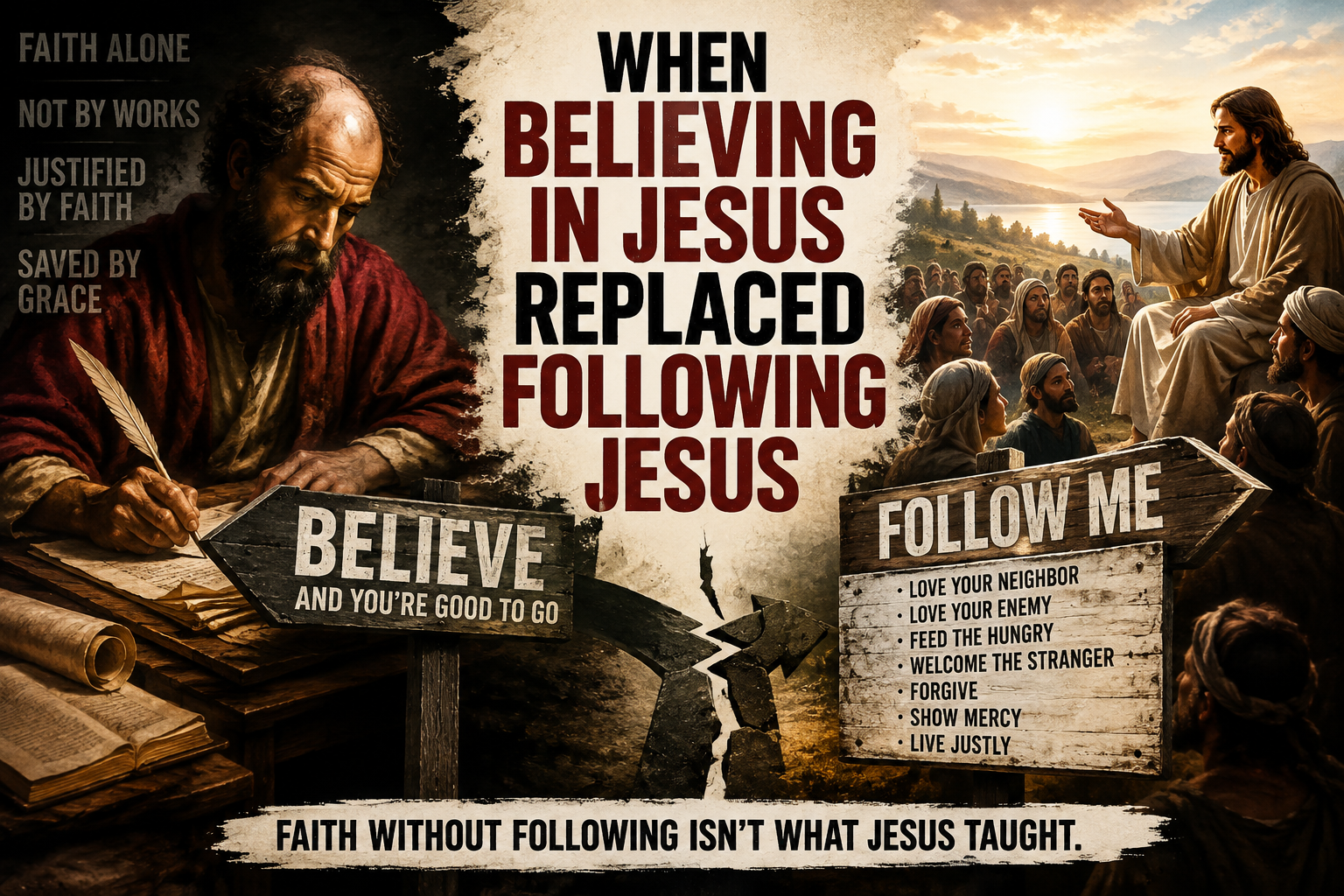
Here is something worth sitting with: believing in Jesus is simply meant to be a team declaration. It was never a jersey you put on. To believe in him — in the truest sense of that word — is to emulate his life, his teachings, and his way of moving through the world.
And part of that emulation means loosening your resistance to releasing the wheel. It means asking God to take it instead. That is no small thing. It is, in fact, a direct assault on the ego — because nothing wounds the ego quite like admitting that your own control is the problem, not the solution.
Do this in earnest. Not as a performance, not as a ritual, but as a lived, daily practice of genuine surrender.



Leave a Reply